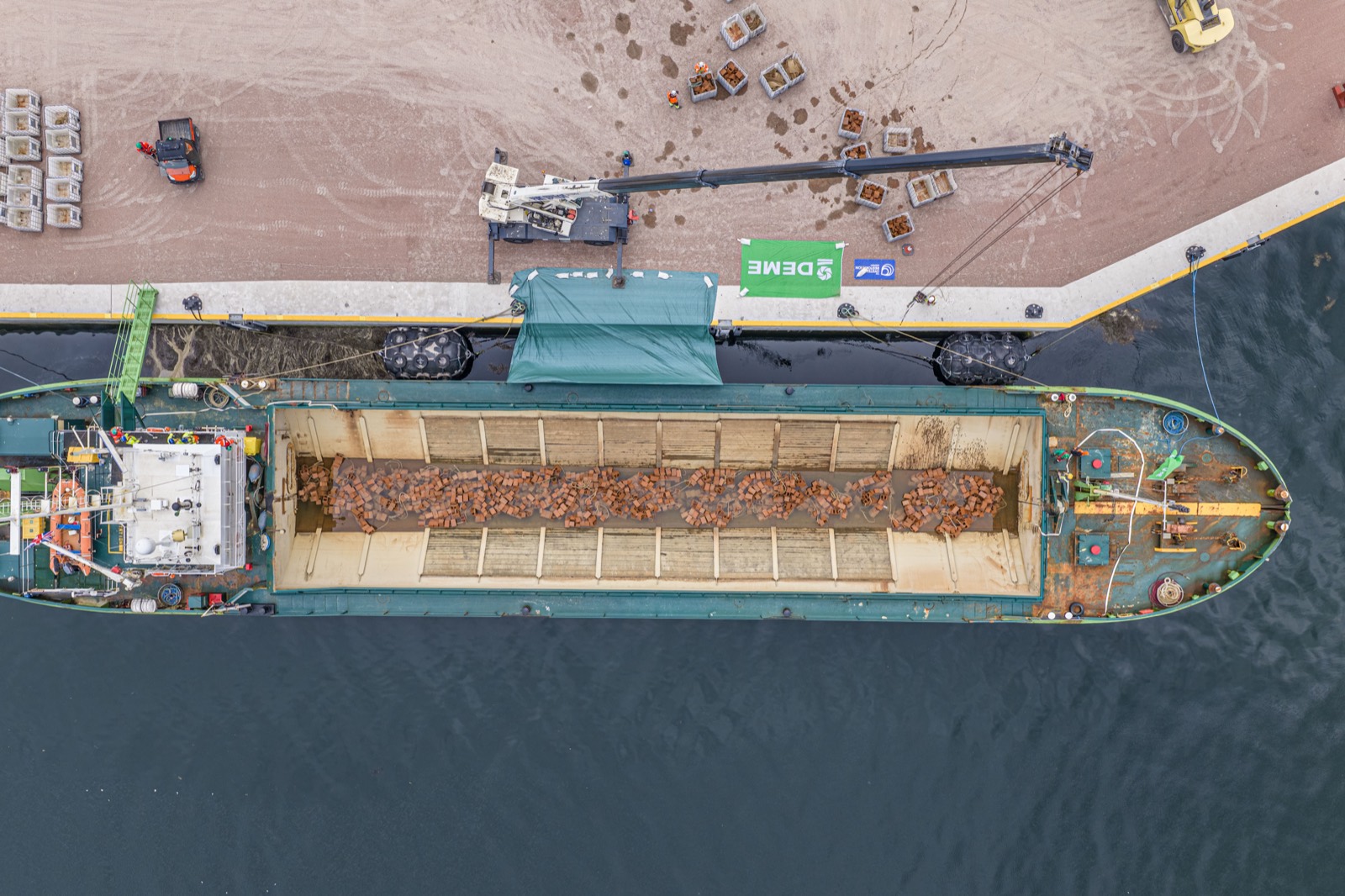
Up to 180 skilled jobs are being created at Maraen Port of Nigg, on the Cromarty Firth north of Inverness, to pre-assemble turbines for the Dogger Bank Wind Farm. The roles are project managers, port operators and mechanical and electrical technicians, and the work is marshalling: taking towers, nacelles and blades off delivery vessels, building them into installable sets on the quay, and loading them out to the installation ship.
Dogger Bank is a 3.6 GW wind farm on the shallow bank in the middle of the North Sea, built in three equal phases by SSE Renewables, Equinor and Vårgrønn in a £9 billion joint venture. It will carry 277 GE Vernova Haliade-X turbines of 13 and 14 MW and supply around six percent of current UK electricity demand. An independent assessment commissioned for the project puts the return to the UK economy at £6.1 billion over its life. Completion is targeted for mid-2028.
Why the work is in the Highlands
Maraen Port of Nigg was chosen in May 2026, by GE Vernova rather than by the wind farm’s owners, as the marshalling harbour for the B and C phases. It has over 1,200 metres of deep-water quay, heavy ground loading across a large laydown area, and a location that lets a jack-up vessel sail loaded rather than shuttling for parts. The port has handled more than 4 GW of offshore wind since 2018, including SSE’s own Beatrice and Seagreen.
It has also just changed its name. In March 2026 the Port of Nigg, Global Energy Group and Global Energy Services were brought together as Maraen, from the Gaelic mara, of the sea, plus en for energy, following the acquisition of the businesses by Mitsui & Co. Europe and Mitsui O.S.K. Lines. Global Energy Group now trades as Maraen Fabrication and Global Energy Services as Maraen Solutions, with the harbour itself becoming Maraen Port of Nigg. The same announcement carried a final investment decision worth over £30 million for a new 16,000 m² heavy-duty quay with roll-on/roll-off capability, backed by a £10 million grant from Highlands and Islands Enterprise.
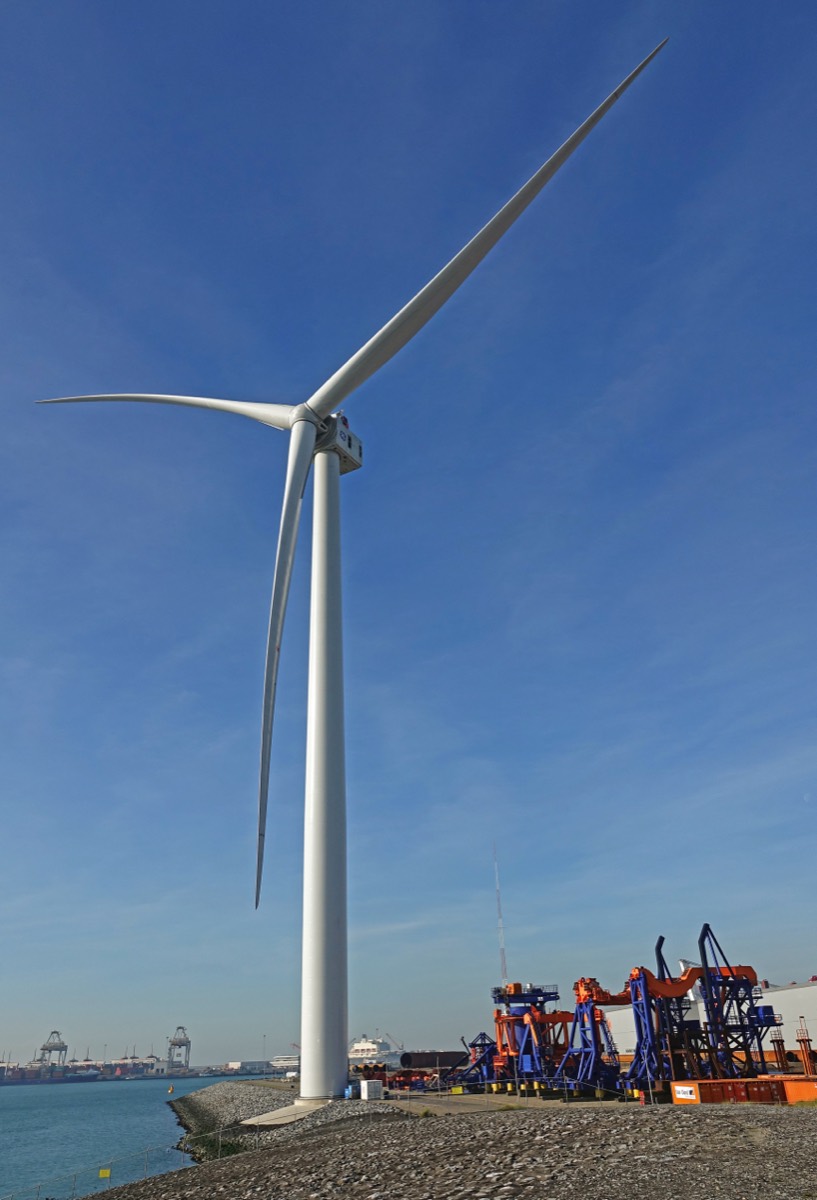
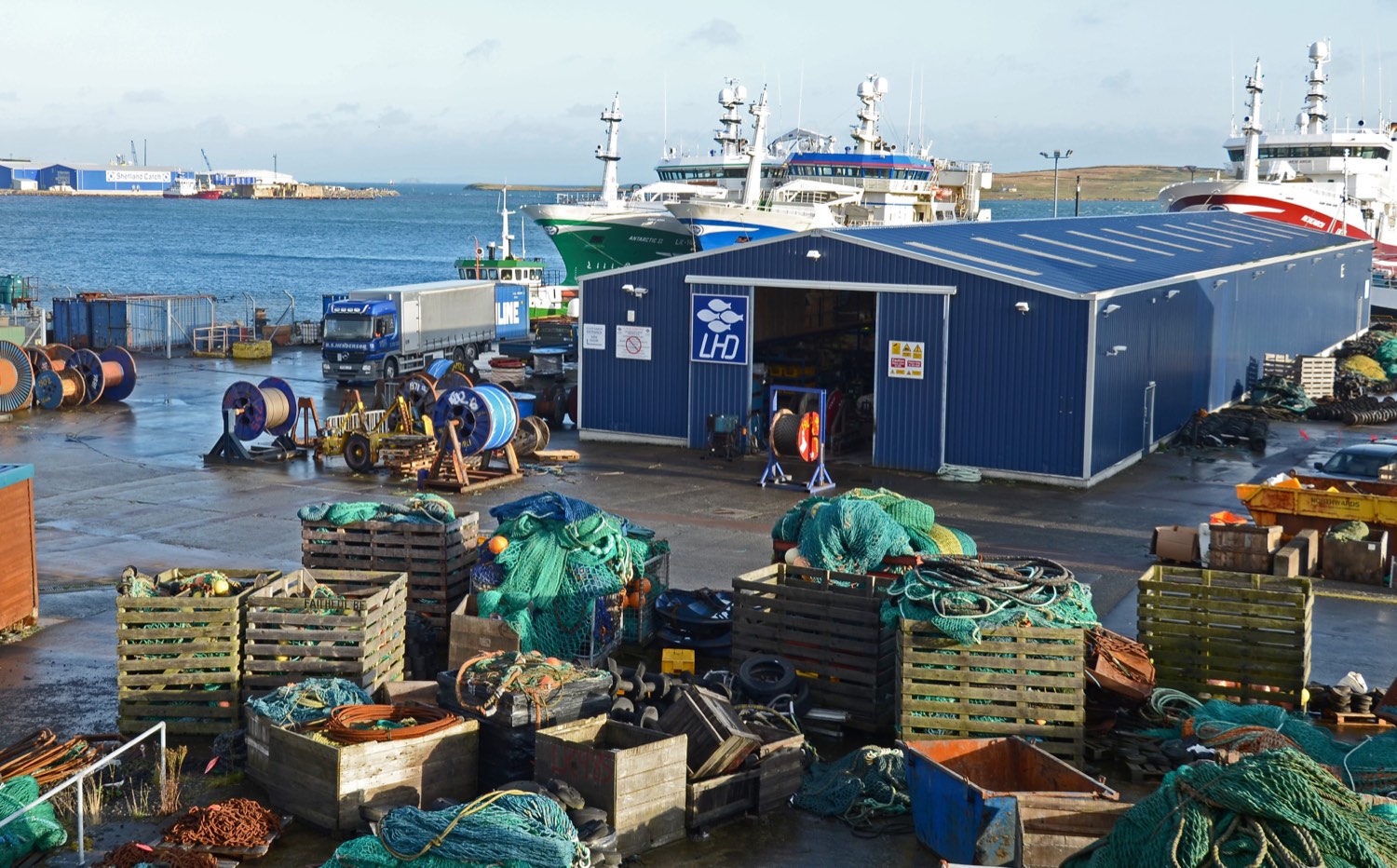
Nigg sits inside the Inverness and Cromarty Firth Green Freeport, which has a target of over £3 billion of inward investment and more than 10,000 jobs across twenty years. The most concrete piece of that so far is Sumitomo Electric’s £350 million high-voltage subsea cable factory next door, due to open this year with more than 150 skilled jobs, and the new quay is partly there to load its cable out.
180 jobs against £9 billion
A £9 billion project is generating 180 port jobs. Little of offshore wind’s capital cost turns into local employment: the turbines are made elsewhere, the vessels are foreign-flagged and foreign-crewed, and the cash mostly flows through the site rather than settling near it. Marshalling work is temporary by definition. When the 277th turbine is standing, the quay clears and the work moves to whichever project marshals next.
The jobs are worth having. The question they raise is what kind of work a sea can generate over thirty years rather than four. Operations and maintenance is the part that lasts, and it currently runs out of coastal bases hundreds of kilometres from the turbines, which is why a Dogger Bank technician spends a large share of a working life travelling to work.
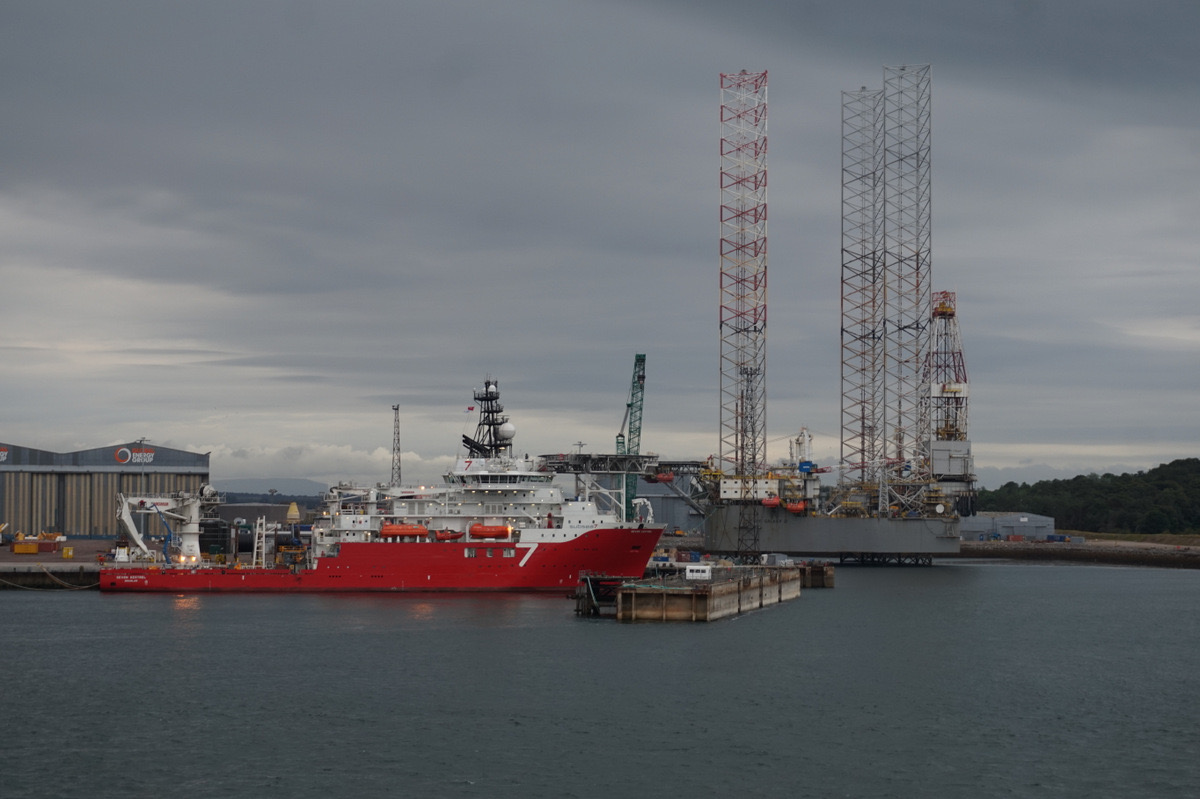
The same firth, a different century
This is not the Cromarty Firth’s first energy boom. The Nigg yard opened in 1972 and built some of the largest oil platforms in the world, employing around 5,000 people at its peak, before closing in 2000 and standing derelict for a decade. The firth is also where redundant drilling rigs go to wait out low oil prices, a fleet we have argued should be reused rather than scrapped. One shore, three industries, sixty years.
Nieuw Doggerland, the project behind this site, proposes something the Cromarty Firth cannot offer: a harbour standing inside the wind fields. The plan is for new land on the drowned plain south of the Dogger Bank, beginning with Nieuw Haven, a working harbour whose nearest customer would be the Hornsea Project 1 turbines 4 km away.
The distances are the argument. A component marshalled at Nigg sails roughly 500 km to reach the Dogger Bank, and every maintenance run for the next thirty years repeats a version of that trip. Nieuw Haven would sit about 90 km south of those turbines and within sight of the Hornsea farms, which is a different order of journey. It also turns marshalling work that ends in 2028 into a permanent place to live and work.
Nigg has been an energy port since 1972 and holds 180 more jobs because of the Dogger Bank. Between the Humber and the Dogger Bank there are now around 1,500 turbines standing in the water, and not one harbour among them.