Tins of mackerel on British supermarket shelves no longer contain mackerel. Princes, the Liverpool-based food group that cans fish for Tesco, Sainsbury’s, Aldi and Lidl, has switched its tins to Chilean jack mackerel, a Pacific species from a different family of fish. The Financial Times reported the change this week and the Independent carried it on 11 September. Jack mackerel has about 100 fewer calories per 100 g and half the omega-3 of the Atlantic fish, and shoppers have complained of bigger bones and a metallic smell.
Waitrose had already suspended North-east Atlantic mackerel in February, taking fresh and frozen fish off its shelves by 29 April and letting the tins sell through. Lidl told the Independent it would review whether the stock still meets its sourcing policy before its next purchasing window for smoked mackerel. Wholesale jack mackerel costs about a third of the Atlantic fish, and several supermarkets are charging a similar price for the tin. Sue Davies, head of food policy at the consumer group Which?, called it skimpflation: shoppers “can end up paying the same price for a product that delivers significantly less nutritional value”.
The advice and the quota
The International Council for the Exploration of the Sea (ICES), whose scientists assess North Atlantic stocks on behalf of governments, advised on 30 September 2025 that the 2026 mackerel catch should be no more than 174,357 tonnes. That is a 77 per cent cut from the 755,143 tonnes it estimated had been caught in 2025. The spawning stock had fallen to around 2,740,000 tonnes, below the 3,070,000 tonne limit under which ICES expects reproduction itself to suffer.
The stock is fished by seven parties: the UK, Norway, the EU, the Faroe Islands, Iceland, Greenland and Russia. They have never all agreed how to share it, so each sets its own quota, and since 2010 the combined catch has exceeded the advice by an average of 39 per cent a year. The Marine Stewardship Council withdrew its certification from every mackerel fishery in the region in 2019 for that reason.
In December 2025 the UK, Norway, the Faroe Islands and Iceland agreed a 2026 total of 299,010 tonnes: a 48 per cent cut on 2025, still 72 per cent above the advice, and fixed until the end of 2028. The EU was outside the arrangement and said it was deeply concerned.
Britain’s most valuable catch
Mackerel is the single most valuable fish the British fleet lands. Scottish vessels caught 191,579 tonnes in 2024, worth £284.9 million, which was 39 per cent of the value of everything Scotland landed that year. The pelagic fleet, most of it based in Shetland and Peterhead, accounts for half of Scottish landings by value. Some 43 per cent of that mackerel by weight was landed abroad rather than into a Scottish port.
Britain’s fish trade runs in both directions: the cod and prawns on the shelf are largely imported, while much of the domestic catch is sold overseas. Tinned mackerel was the cheap domestic exception, a British-caught oily fish at a price that let households meet the advice to eat one oily portion a week. That product is now filled with a fish caught in the Pacific off Chile and Peru, and sold at Lidl under signs that still read mackerel.
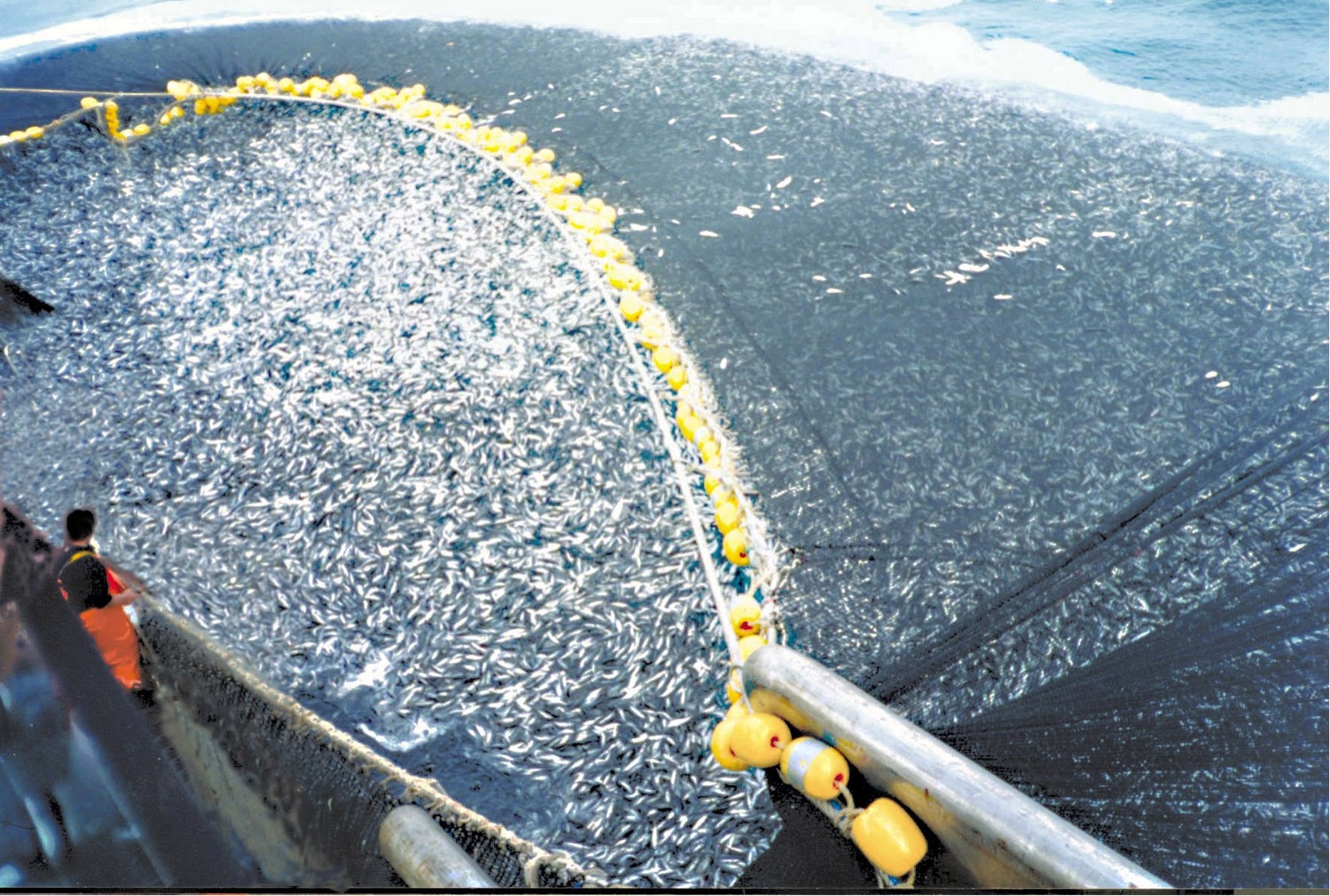
With North Sea fish stocks dwindling, what secures the food supply?
The mackerel saga is just one of many examples of a food system constrained by global supply and overfishing. Nieuw Doggerland, the project behind this site, proposes to build new land on the Dogger Bank, between Britain and the Netherlands, and with it safe havens for spawning fish and new habitat that increases fish stocks. Mackerel range from Portugal to Greenland, and the stock will only recover if the seven governments that fish it agree to catch no more than the scientists advise. Plaice, sole, lobster, oysters and seaweed can be raised in sheltered water whose protection is fixed by treaty.
The waters around each island and throughout the lagoons become permanent no-take zones, written into the founding treaty and enforced by a resident maritime authority whose own fisheries and tourism depend on them. Fully protected zones recover fish biomass several-fold within a decade, and adult fish spill over into the surrounding grounds over ten to fifteen years, which is where commercial boats benefit. The Dogger Bank’s own history shows why the treaty matters: governments agreed in 2013 to close about a third of the bank’s protected areas to bottom trawling, and by 2019 the surviving proposal covered around 5 per cent.
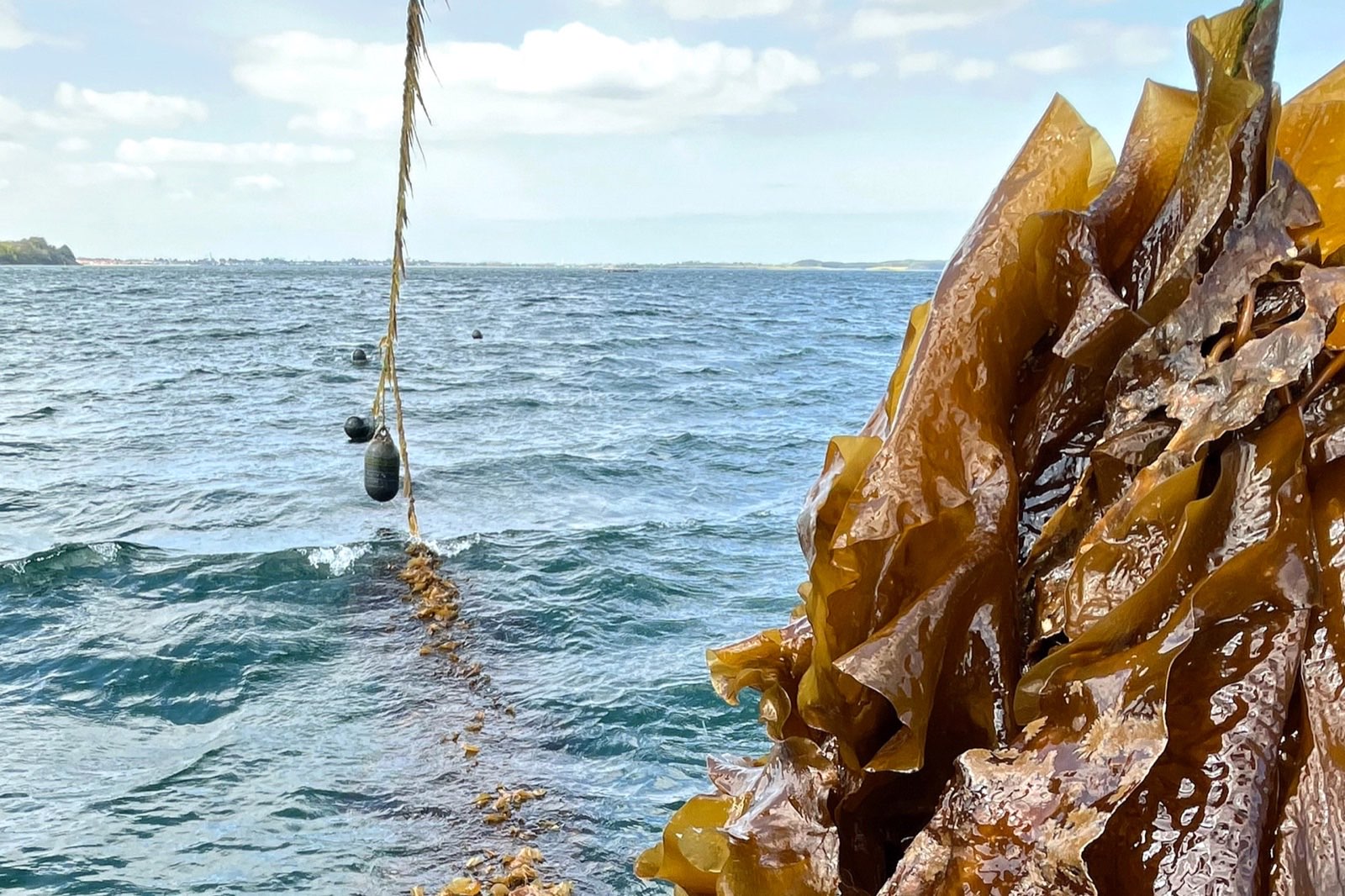
Sheltered, seagrass-lined shallows are proven nursery habitat for plaice and sole, and the archipelago’s lagoons are designed to recreate the flatfish nursery the Dogger Bank once was. Aquaculture zones for shellfish and seaweed, with no finfish cages, are scheduled for the archipelago phase from 2034; sugar kelp has already been grown and landed at commercial grade inside a Danish wind farm. The research station’s hatchery starts with European lobster and native oyster, where the evidence is strongest, and takes on finfish only where monitoring shows it works.
Japan farms the mackerel
Japan is Norway’s largest mackerel market. Japanese consumption was 260,000 tonnes in 2024, and around half of it came from Norway, from the same North-east Atlantic stock now leaving British tins. Japan has also farmed the fish. In 2012 a marine biology group at Kyushu University established the first full life-cycle aquaculture system for chub mackerel, a close relative of the Atlantic species: broodstock raised from eggs produce the next generation, and no wild juveniles are taken.
The fish is sold raw. Karatsu Q Saba, the brand developed by Karatsu City with Kyushu University, is farmed from egg to plate, and because no stage of its life is spent in the wild the risk of the Anisakis parasite is low enough for it to be eaten as sashimi. Nissui, one of Japan’s largest seafood companies, harvested its first land-based chub mackerel in November 2021 from a recirculating tank system at Sakaiminato built with the engineering firm Hitachi Zosen, seventeen months after stocking. Its stated aim is a shorter grow-out and higher stocking density to reach profit.
The plan for Nieuw Doggerland rules out intensive finfish cages, and its hatchery begins with lobster and oyster, taking on finfish only where monitoring justifies it. Japan settles one part of that question in advance: the biology of raising a mackerel from egg to plate has been worked out and run commercially for over a decade. What remains for the North Sea is whether the same technique can be run in sheltered lagoons, without cages, to boost existing wild fish stocks, with juveniles bred from captive broodstock and released into the sanctuary. The research station’s remit includes that question, and its finfish trials will be published whether the results are positive or negative.
The mackerel arrangement runs to the end of 2028, and ICES publishes its next advice at the end of this month. New islands in the North Sea work to a longer calendar. The first five million oysters go into the inner lagoons in the hub phase from 2029; from 2034 the reef network spreads across every lagoon, towards fifty million. The no-take waters around them are fixed by treaty for as long as the islands stand.
Fully protected water recovers its fish biomass several-fold within a decade and feeds the surrounding grounds for years after that. By the 2040s the archipelago would hold one of the largest marine sanctuaries in the North Sea, with oyster reefs and flatfish nurseries returned to a sea that lost them over the last century. The recovery continues for as long as the treaty does.