The Vision · Transport

The Land Link,
Restored

For eight thousand years there has been no way to walk from Britain to the continent. Nieuw Doggerland rebuilds the connection the sea took: a chain of causeways, bridges, and rail running 320 kilometres from Immingham to IJmuiden.

Immingham to IJmuiden,
via the Dogger Bank

The route runs from the deep-water Port of Immingham on the Humber to the Port of IJmuiden on the Dutch coast, threading through the central hub island on the Dogger Bank. Hull, linked to Immingham by the Humber Bridge, serves as the UK passenger gateway.

Rather than one impossible span, the crossing is built as stepping stones: each island in the archipelago shortens the next bridge or causeway until a continuous land bridge connects the two coasts. It is the same logic that drained the Fens and reclaimed the Zuiderzee, applied to open sea.
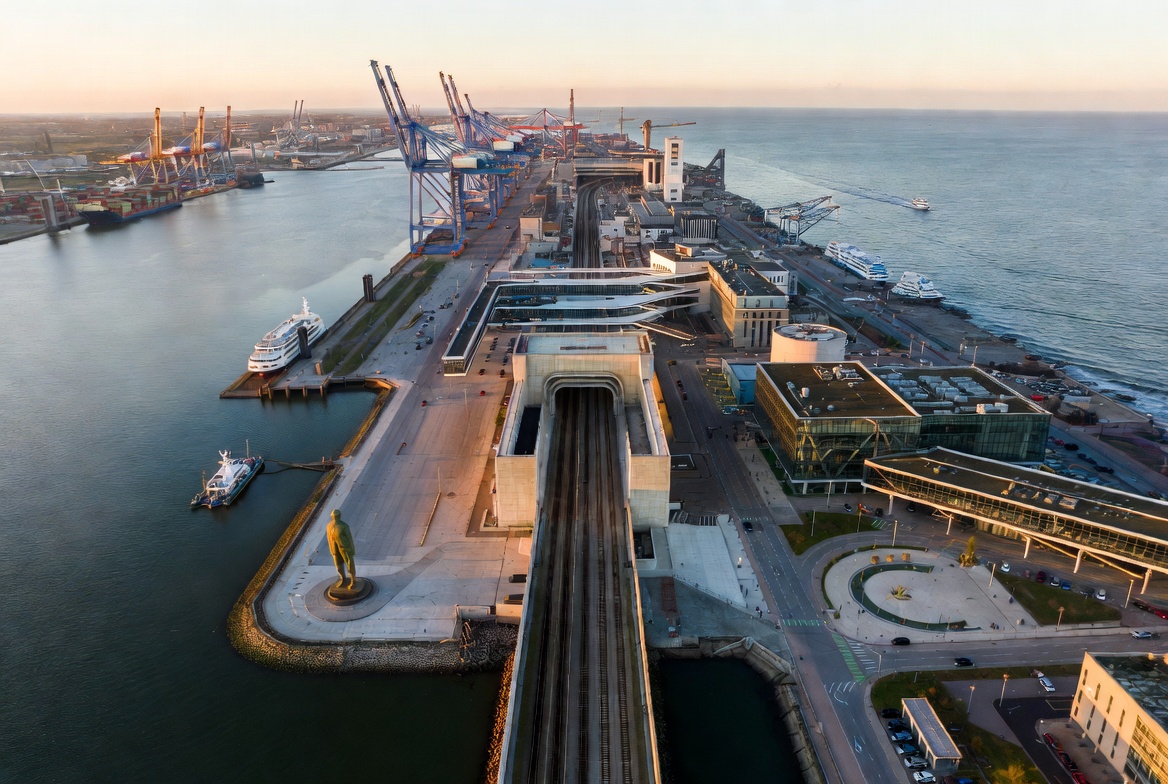
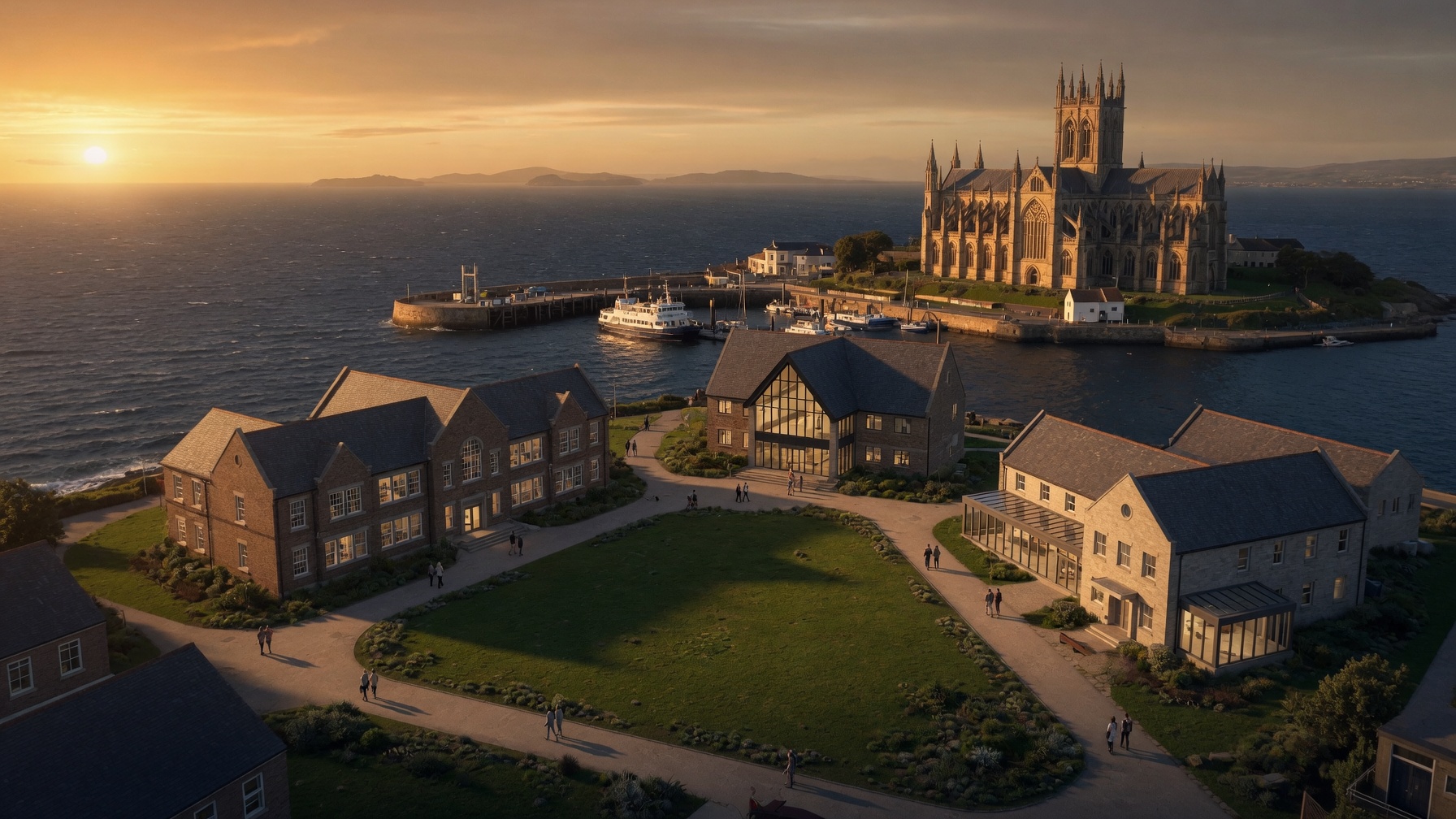
Nieuw Haven port with ferry terminal
320km
Immingham to IJmuiden
2
Nations reconnected by land
3
Modes: ferry, then rail and road
8,000yrs
Since the last land connection

Stepping Stones to a Continuous Link

Port city quaysides with vessels at golden hour

Ferry First

The first permanent public link is a ferry from the coasts to the hub, opening as soon as the central island and its port facilities are operational, establishing the route before the spans are built.

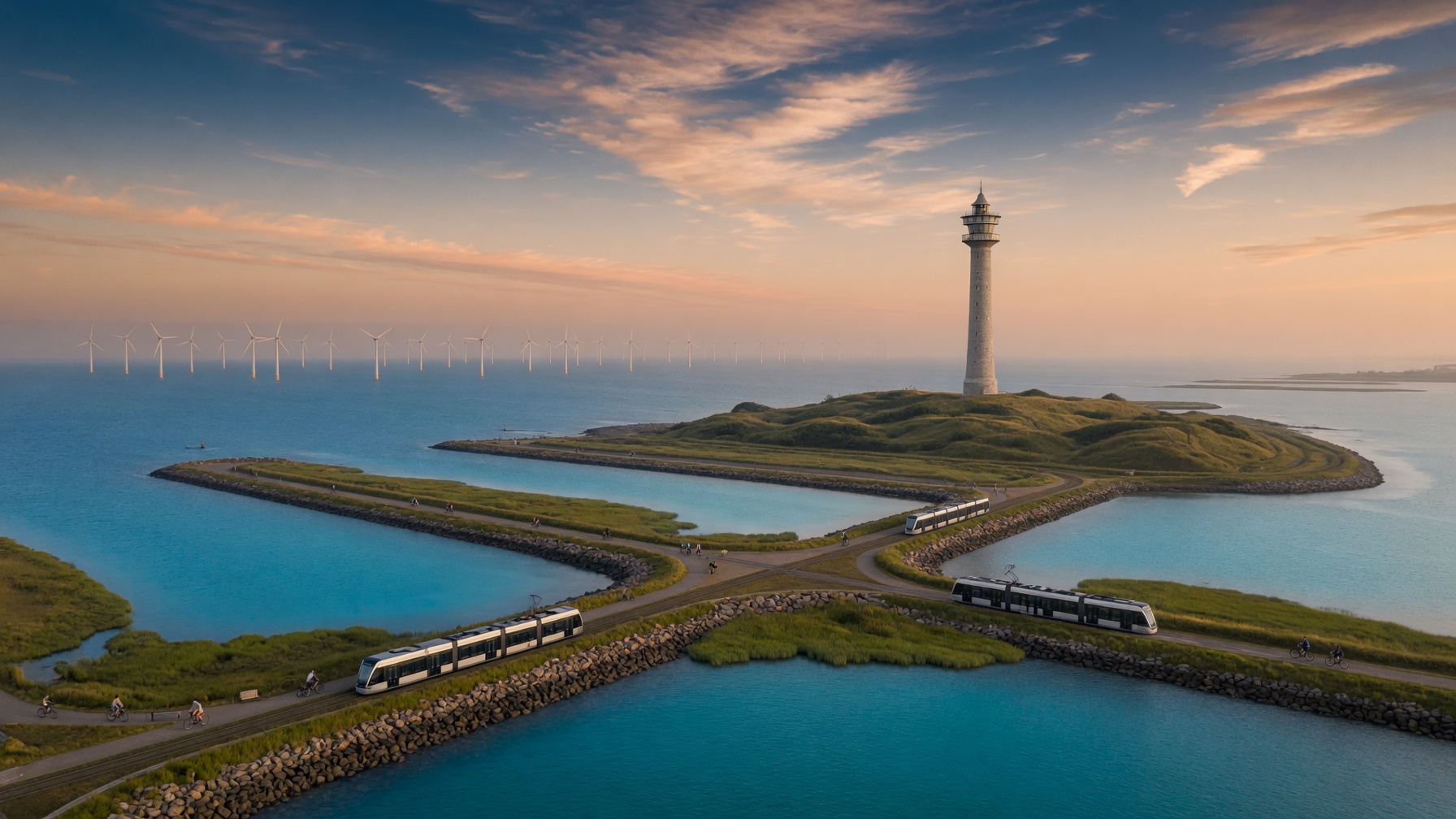
Island city with causeways and a distant suspension bridge across the North Sea

Causeways & Bridges

As the archipelago extends toward Immingham and IJmuiden, causeways and bridges hop island to island, each new landfall shortening the open-water gap to the next.

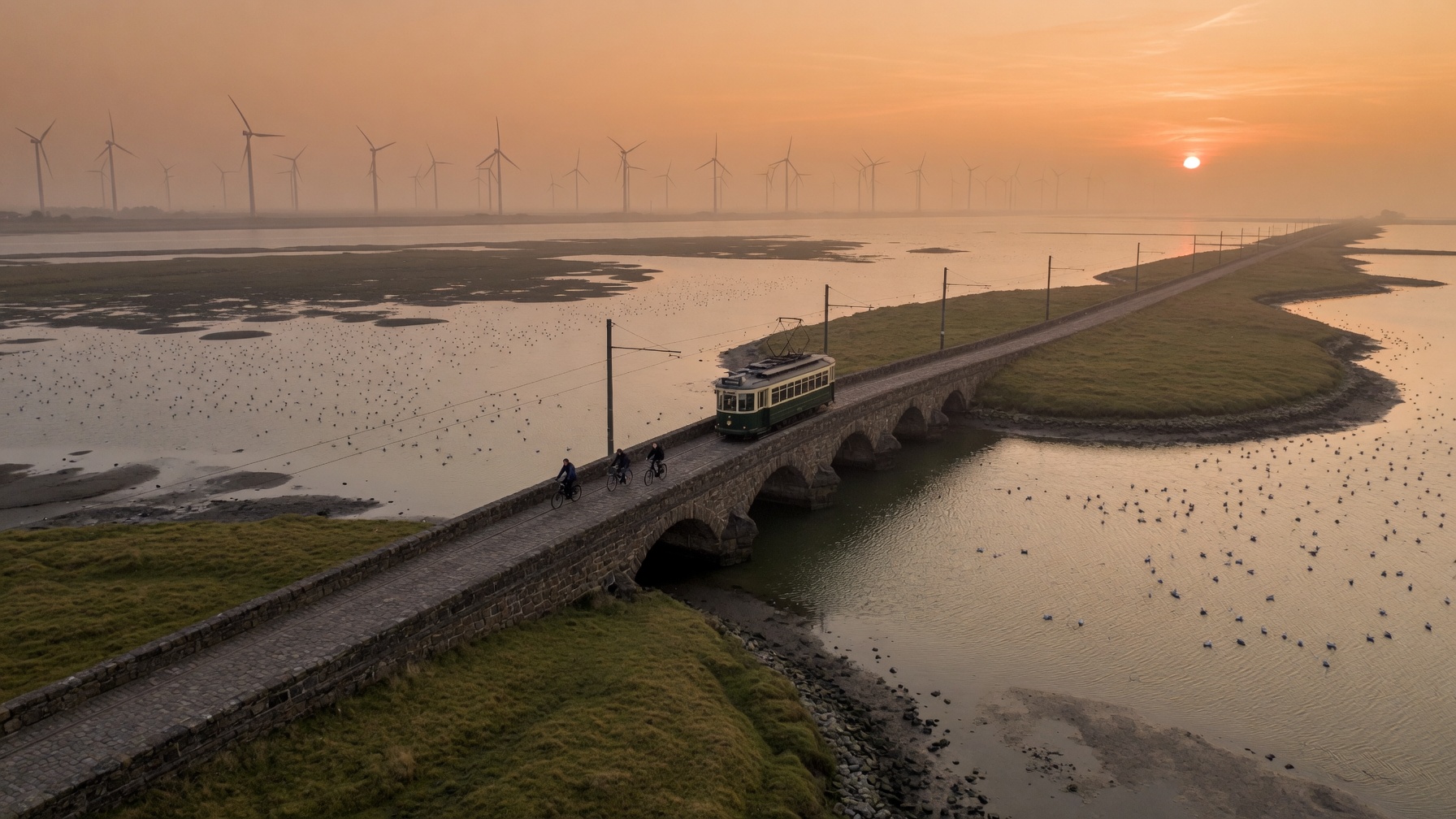
Rail causeway striding across open water

Rail & Road

A rail corridor and road complete the land bridge, carrying passengers and freight directly between the British and Dutch networks for the first time in human history.

Why It Can't Be a Single Bridge

A single span was never on the table. The longest fixed sea crossing ever built, the Hong Kong–Zhuhai–Macau link, runs 55 kilometres, and even that is a chain of bridges, tunnels, and artificial islands rather than one bridge. The longest railway ever carried across the open sea, Russia's Kerch crossing, reaches just 18 kilometres.

"At 320 kilometres, the Immingham–IJmuiden corridor is roughly six times the longest sea crossing on Earth; no engineering doubles that record in a single leap."

So the crossing is not built as a bridge at all. It advances island to island, and every hop of open water between islands falls within the 10–20 kilometre spans engineers already build as routine: the Øresund (16 km), the Great Belt (18 km), the Great Seto crossing (13 km). The record-breaking distance is covered not by spanning the sea, but by making land across it.

Not Stepping Stones, but Places

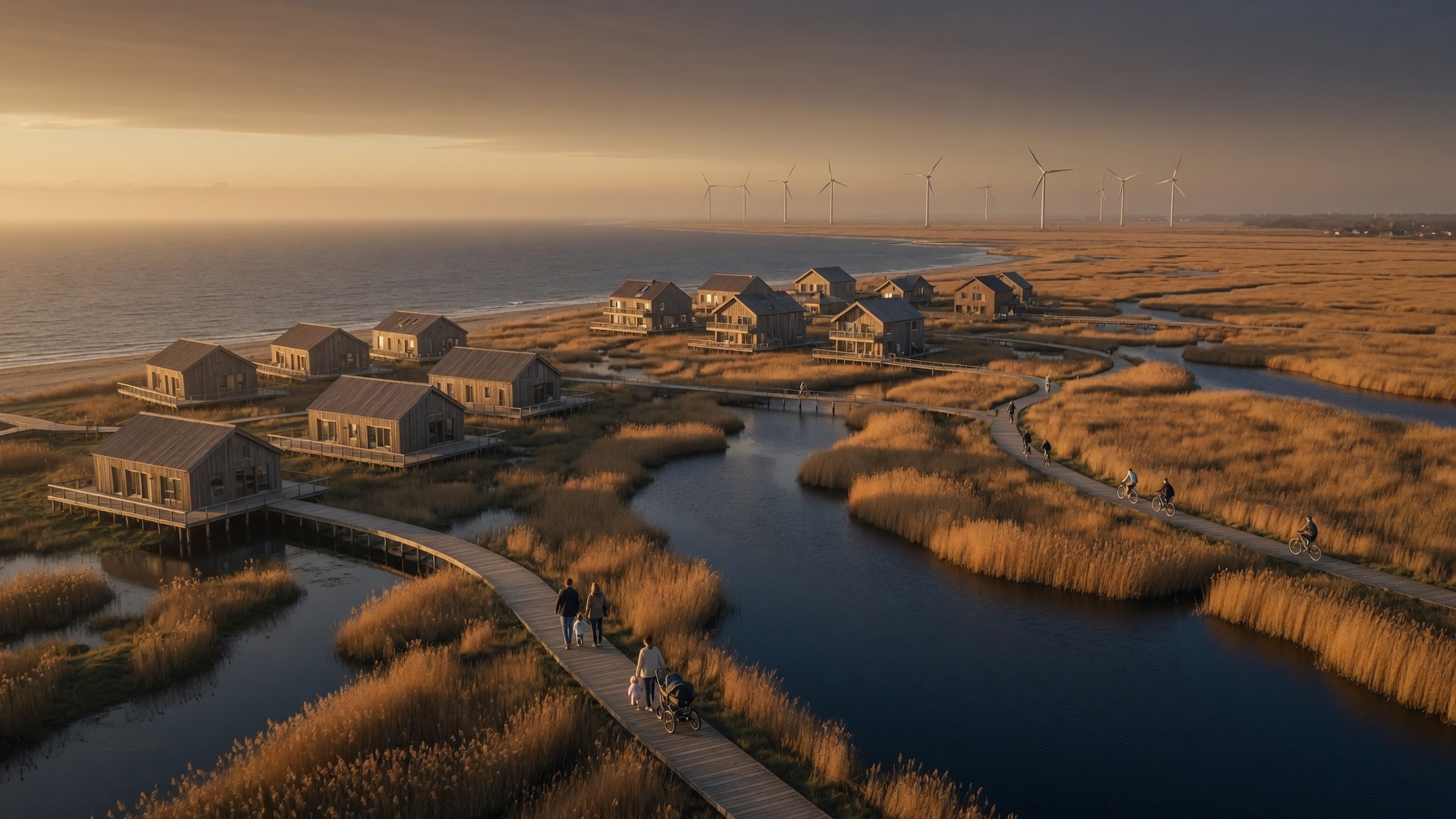
The islands are not obstacles to be passed over; they are the point. Each island in the archipelago is planned as a place in its own right: a rail station, a town, harbours and squares, schools and a civic life of its own. The crossing becomes a string of small island communities.

Travelling between Britain and the continent means passing through places where people live and work, not racing across an empty link. A traveller does not cross a bridge; they cross a country: a linear archipelago of towns rising from the North Sea, each with its own name, harbour, and station on the line.

An island town of residential districts rising among wetlands and turbines

Two Ports, One Route

The Port of Immingham, the UK's largest port by tonnage, anchors the western end, with Hull providing the passenger gateway across the Humber Bridge. The Port of IJmuiden, at the mouth of the North Sea Canal to Amsterdam, anchors the east. Both are construction and logistics partners from the outset.

At the centre, Nieuw Haven, the hub island's port, handles construction supply, ferry traffic, and eventually rail. Its main square is planned as the civic heart of the crossing, honouring the engineers who spent their lives chasing exactly this kind of connection.

Join the Founding Circle

Nieuw Doggerland needs bridge and causeway engineers, rail and ferry operators, and port authorities ready to reconnect two nations. If you move people and goods, join the Founding Circle.

Get Involved