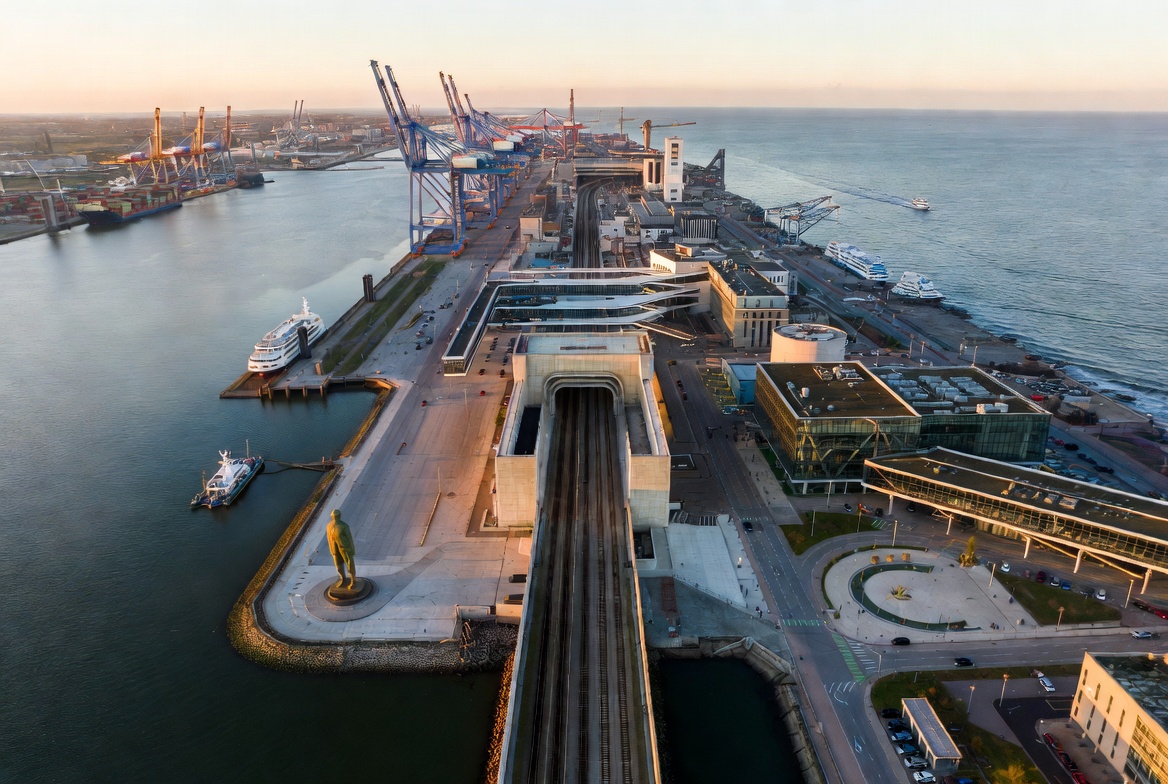
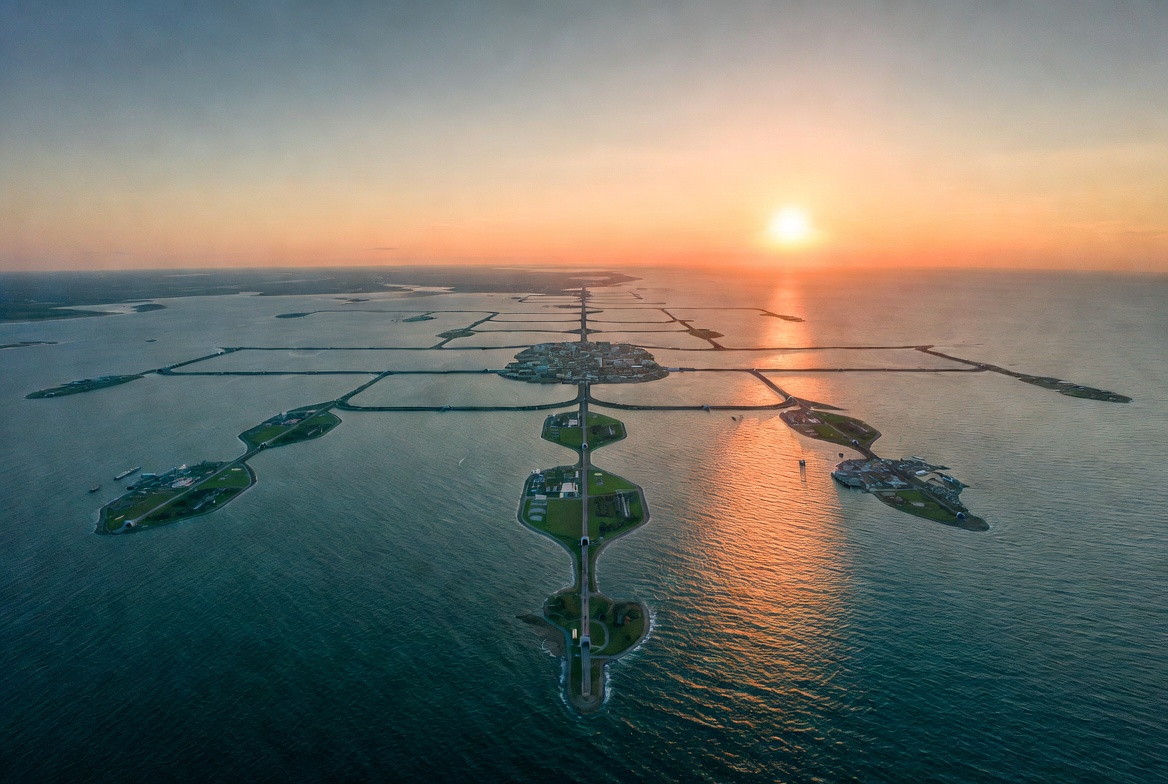
Raising an island in the open North Sea is not one act but a sequence: shelter before land, land before a port, and the port before everything else. These are the four construction phases that turn seabed into solid ground.
How It's Built
The site is chosen because it is buildable: a shallow plateau of 20–30 metres in otherwise deep sea, south of the Hornsea wind farms. On that ground, proven Dutch and British reclamation methods do the rest. The work proceeds in four deliberate stages, each one making the next possible.
Phase 1 · Safe Harbour
The first move is not to build land; it is to break the sea. Before a single load of fill is placed, a perimeter of rock-armour breakwaters is laid on a shallow plateau in the southern North Sea, enclosing a pocket of calm water in the open sea.
Graded armourstone, the same rock that defends the Dutch coast and built the breakwaters of Maasvlakte 2, absorbs the wave energy, turning a hostile stretch of sea into a sheltered basin. The result is a reliable safe harbour: a weather-protected anchorage where dredgers, barges, and supply vessels can work and ride out storms.
Everything that follows depends on it. You cannot raise an island in open water; you first have to make the water still.
Phase 2 · The Island
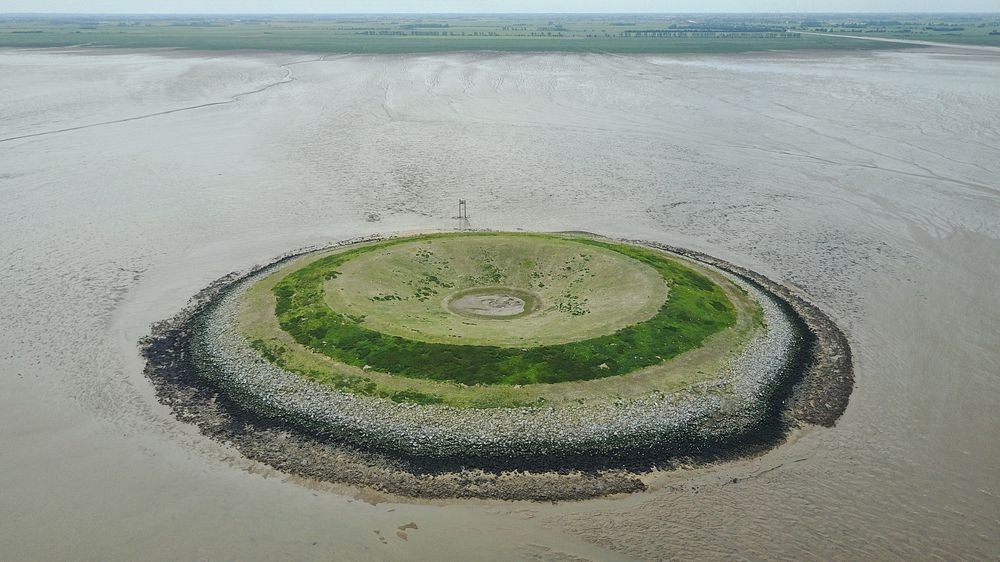
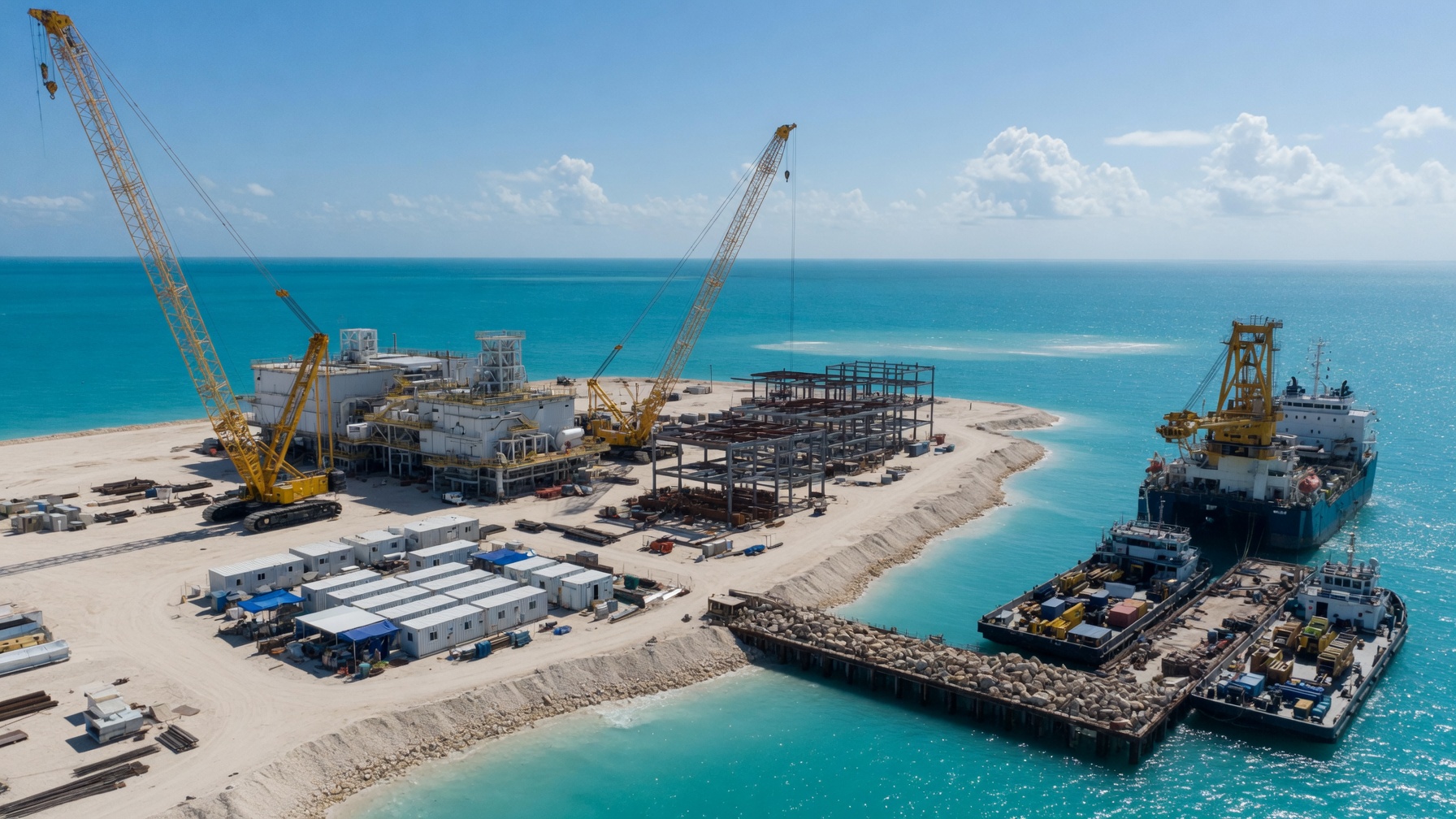
With the harbour holding the sea at bay, the perimeter is closed into a full rock-armour revetment and the monumental infill begins. Hydraulic dredgers pump sand from licensed borrow areas into the enclosure, layer upon layer, until the seabed rises above the waterline and is compacted into solid, buildable ground.
This is the first land of Nieuw Doggerland: the seed of Nieuw Haven. The methods are not speculative; they are exactly those that reclaimed Maasvlakte 2 and the Dutch polders, delivered by the world's leading dredging firms (Boskalis and Van Oord) and made viable by the shallow bank, where the water is only 15–30 metres deep.
From the very first load, the submerged faces are engineered as reef: solid ground above, living habitat below.

Phase 3 · The Port
A sheltered basin becomes a working port. Quays, berths, laydown yards, and bulk and roll-on/roll-off handling turn Nieuw Haven into a place that can receive its own building material and resupply at industrial scale.
This is the moment the project becomes self-feeding; every tonne of rock and sand for the islands still to come lands here first. The port is the engine of everything beyond it; without a way to land material in the middle of the North Sea, the archipelago cannot grow. With one, construction accelerates.

Phase 4 · Archipelago & Habitat
With a productive port driving supply, the build radiates outward. New islands, and the sheltered lagoons between them, spread along the Immingham–IJmuiden corridor, each one a reef by design.
This is where construction becomes creation. The calm inter-island lagoons seed the oyster reefs, seagrass meadows, and fish nurseries that bring the sea back to life, while the first districts of Nieuw Haven take shape as a place for people to live and work. Habitat for wildlife and habitat for people rise together, from the same raised ground.

Get Involved
Building Dogger Island will take dredging and marine-construction firms, port engineers, and offshore logistics specialists who have raised land from the sea before. If you build islands, there is a place for you in the Founding Circle.
Get Involved