Rock armour gets the drama; sand does the work. On 20 July, after sea trials in the North Sea, Royal IHC handed over the Seaway to Boskalis: a trailing suction hopper dredger of 178 by 38 metres with a 31,000 cubic metre hopper, reported to be the largest ever built in the Netherlands and one of the largest anywhere. Boskalis christened the Windpiper, the rock-installation ship that would armour an island’s edges, only weeks earlier. The Seaway is the other half of the equation: the class of ship that puts the island there in the first place.
A trailing suction hopper dredger is, reduced to essentials, a ship that inhales seabed. Twin suction pipes with underwater pumps draw sand into the hopper; at the destination, discharge pumps with a combined 15,000 kW push it out again, through a pipeline or rainbowed over the bow. Land reclamation is this cycle, repeated with patience: dredge, sail, discharge, return.
Built for the long haul, fuelled for the transition
The Seaway is diesel-electric throughout, with Azipod propulsion and an optimised hull. More telling is what she is prepared for: dual-fuel main engines and onboard methanol plant and storage, ready to run on green methanol as supply matures. Boskalis is signalling that the next generation of land-building will need to answer for its emissions; on a project whose entire argument rests on ecological credibility, ours certainly will.
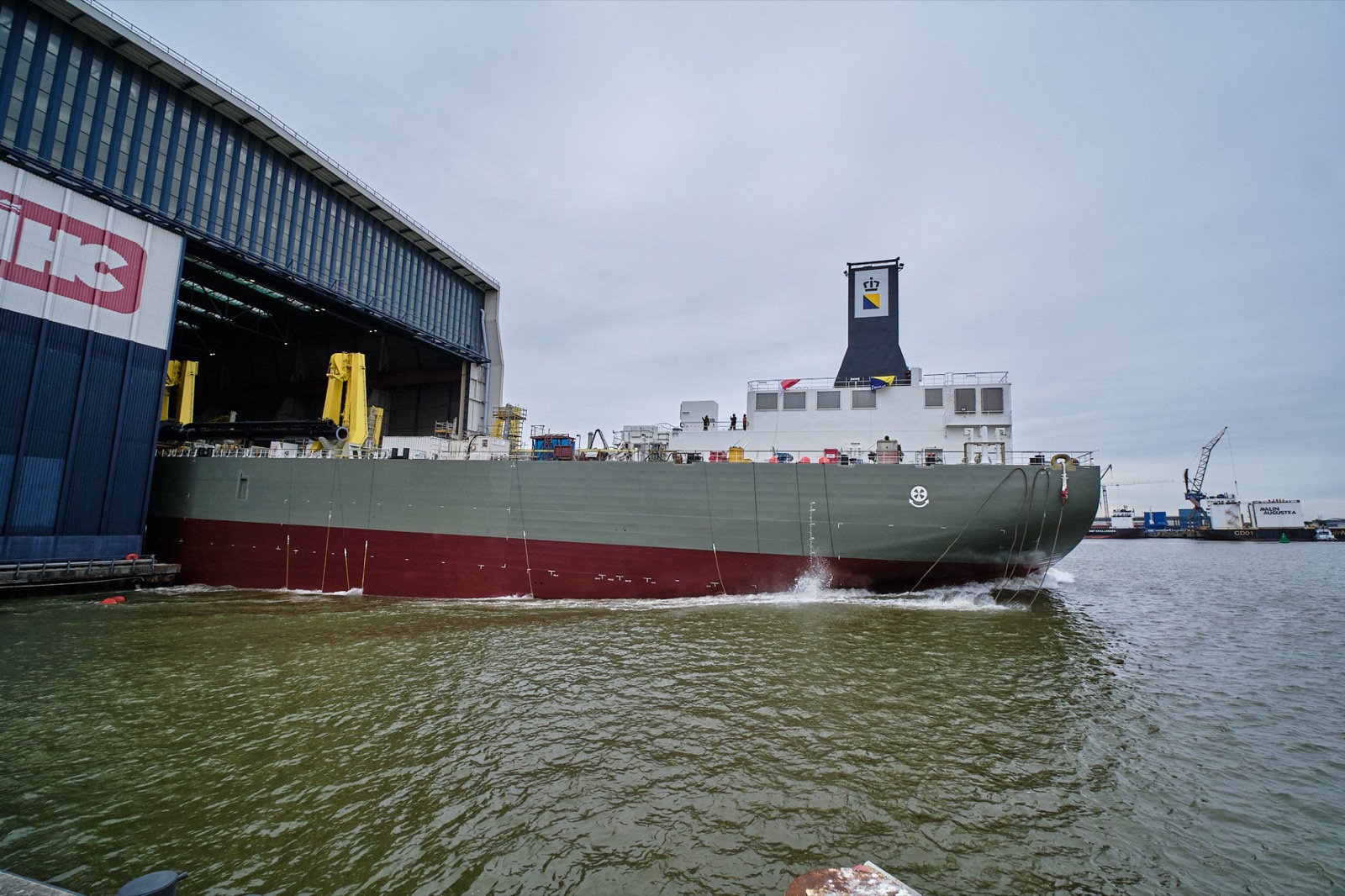
Her first assignment is quietly instructive. Boskalis Nederland has put the vessel to work on channel bank nourishment off Den Helder, with beach nourishment at Texel and foreshore nourishment near Julianadorp: sand placed to defend the Dutch coast against erosion and rising seas. The Netherlands already spends its dredging capacity holding the line against the sea. The step from defending old land to making new land is one of intent, not engineering.
Why it matters to Nieuw Doggerland
The Seaway is Boskalis’s ship, and Boskalis has no involvement in Nieuw Doggerland. But our founding prospectus names the Dutch dredging industry as the natural feasibility partner for the construction programme, and the arithmetic of Phase 2’s central hub island, five to ten square kilometres of new ground, is ultimately an arithmetic of hopper loads. A vessel that moves 31,000 cubic metres per voyage, stationed in the North Sea and built to run clean, is precisely what the Islands programme will be chartering when the studies give way to sand.
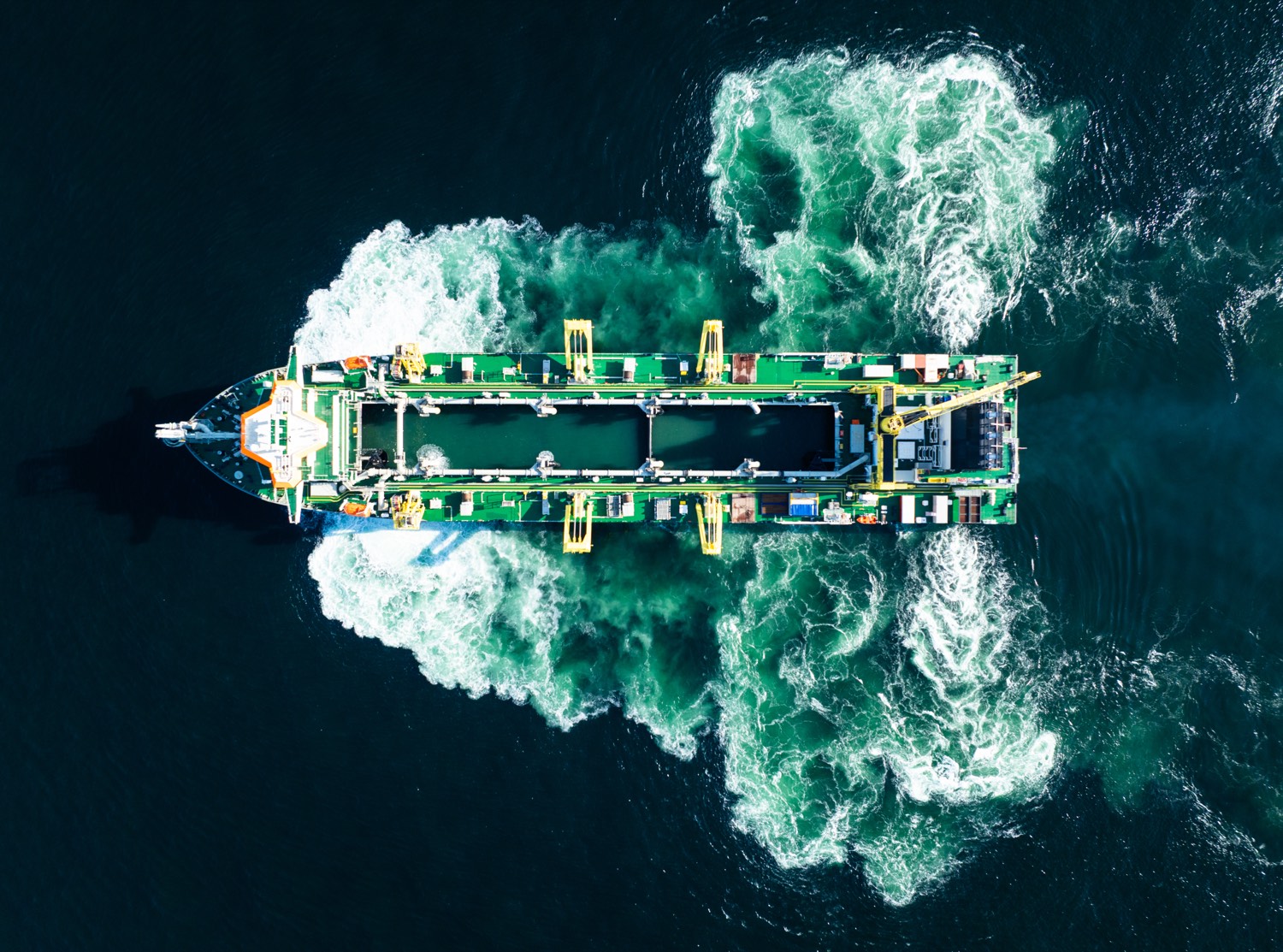
The fleet that will rebuild Doggerland is not hypothetical; it is being launched, christened, and put to work a voyage at a time. The Seaway makes two in a month.
Source: vessel details and delivery via SWZ Maritime and Dredging Today, from Royal IHC and Boskalis announcements.