On 18 November Palmer Luckey, who founded the virtual-reality firm Oculus and co-founded the American defence contractor Anduril, told his followers on X that he has been paying for an ocean platform since 2014. He calls it SLAB. It is a seastead, meaning a permanent settlement at sea, and he says it has a design life of 1,000 years.
The purpose is industrial. Luckey wrote that the goal was “to be cheaper than land and absent state/local laws that cripple critical American industries like metal processing, medical research/treatment, desalination, oil refining, chemical engineering, and more.” He published it with one picture, an AI-generated image of a walled rectangle in open water carrying towers, chimney stacks and gardens.
Nieuw Doggerland, the project behind this site, also proposes to make new ground at sea and put industry on it: a harbour and a group of islands in the southern North Sea between Britain and the Netherlands. We think Luckey has identified a real shortage. We differ on how the ground should be governed, and the North Sea has fifty-nine years of evidence on that point.
What Luckey has disclosed
Luckey says the money came from selling Oculus to Facebook in 2014, a deal Facebook valued at about $2 billion for the whole company. In his words, “me and a few close friends cashed it up at a $1B valuation back in 2017”; the friends are not named, and the figure is his description of a private funding round. He added that the project “still has a long way to go”.
He spoke up because reporters were about to. Liz Hoffman and Reed Albergotti of the news site Semafor had been asking about fresh money going into the venture, and Luckey wrote that they planned to describe it as a floating AI data centre. His reply was that SLAB is “way cooler than that, way older than that”.
Nothing else is public. Luckey has not given a location, a size, a cost, a construction method or an opening date, and no engineering study or regulatory filing has been independently verified. SLAB is a private venture and is not an Anduril product.
The law three miles offshore
Asked how close to San Francisco the platform could operate while staying outside United States jurisdiction, Luckey answered: “Three miles.” That is roughly where California’s state waters end. Federal waters begin there: the United States claims a 12-nautical-mile territorial sea and an Exclusive Economic Zone (EEZ) out to 200 nautical miles, and it retains authority over the construction and use of artificial islands within that zone.
The United Nations Convention on the Law of the Sea (UNCLOS), the treaty most coastal states work under, is plain on the point. Article 60 gives the coastal state exclusive jurisdiction over artificial islands and installations in its EEZ, including customs, health, safety and immigration law. The same article says such structures are not islands in law and have no territorial sea of their own.
The objections so far follow from that. Decrypt, the technology news site, noted that treating patients offshore would not make an unapproved drug legal to sell in the United States. The journalist Joshua Topolsky argued with Luckey on X that rules can be reformed without building an island; Luckey replied that reform needs 60 senators and that he would sooner build somewhere people can obtain “safe but currently illegal medicine ASAP”. The Free Cities Foundation, which is sympathetic to the idea, records that critics doubt a structure on this scale can be built and insured at a reasonable cost.
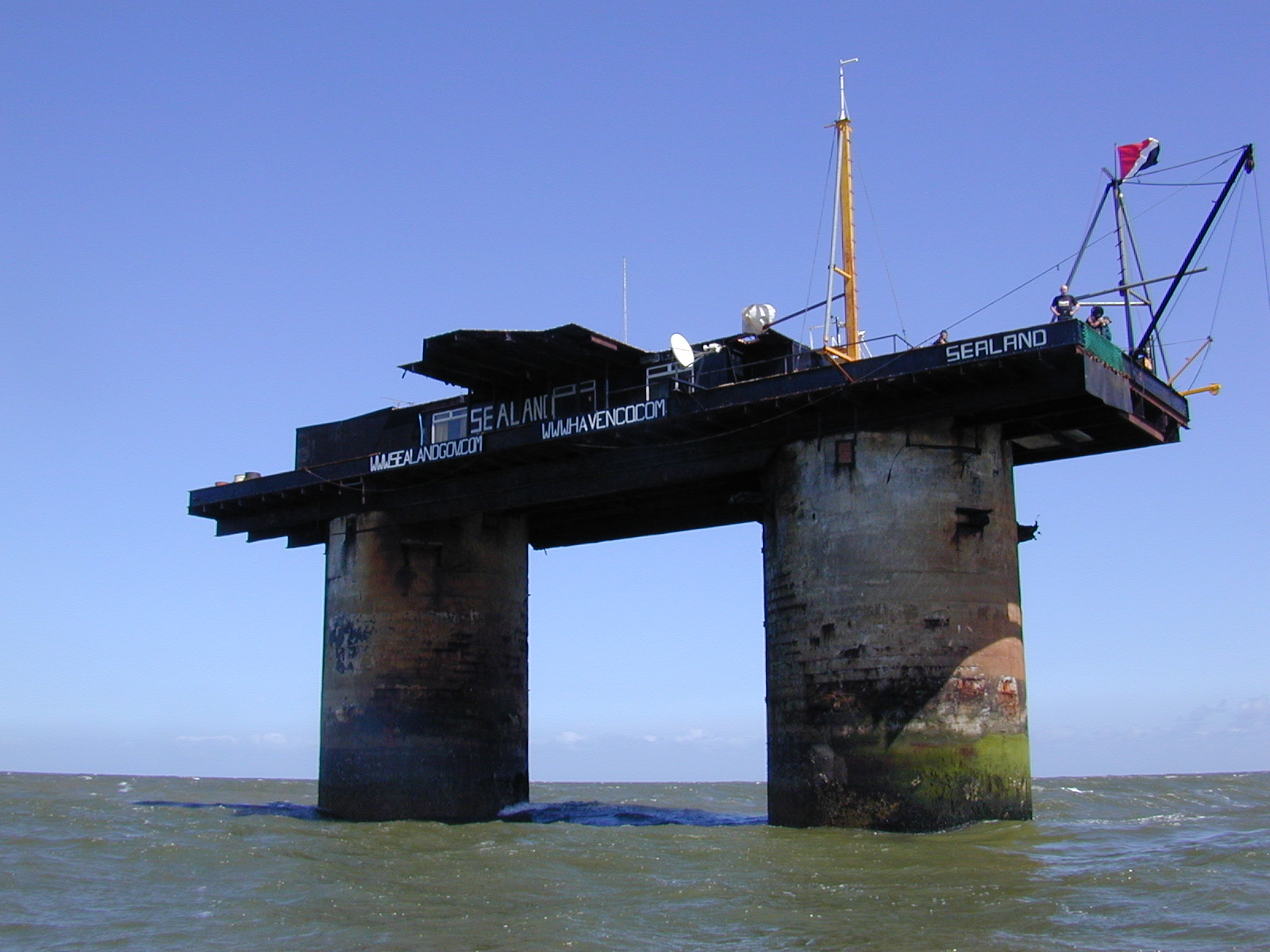
Sealand: the North Sea’s own seastead
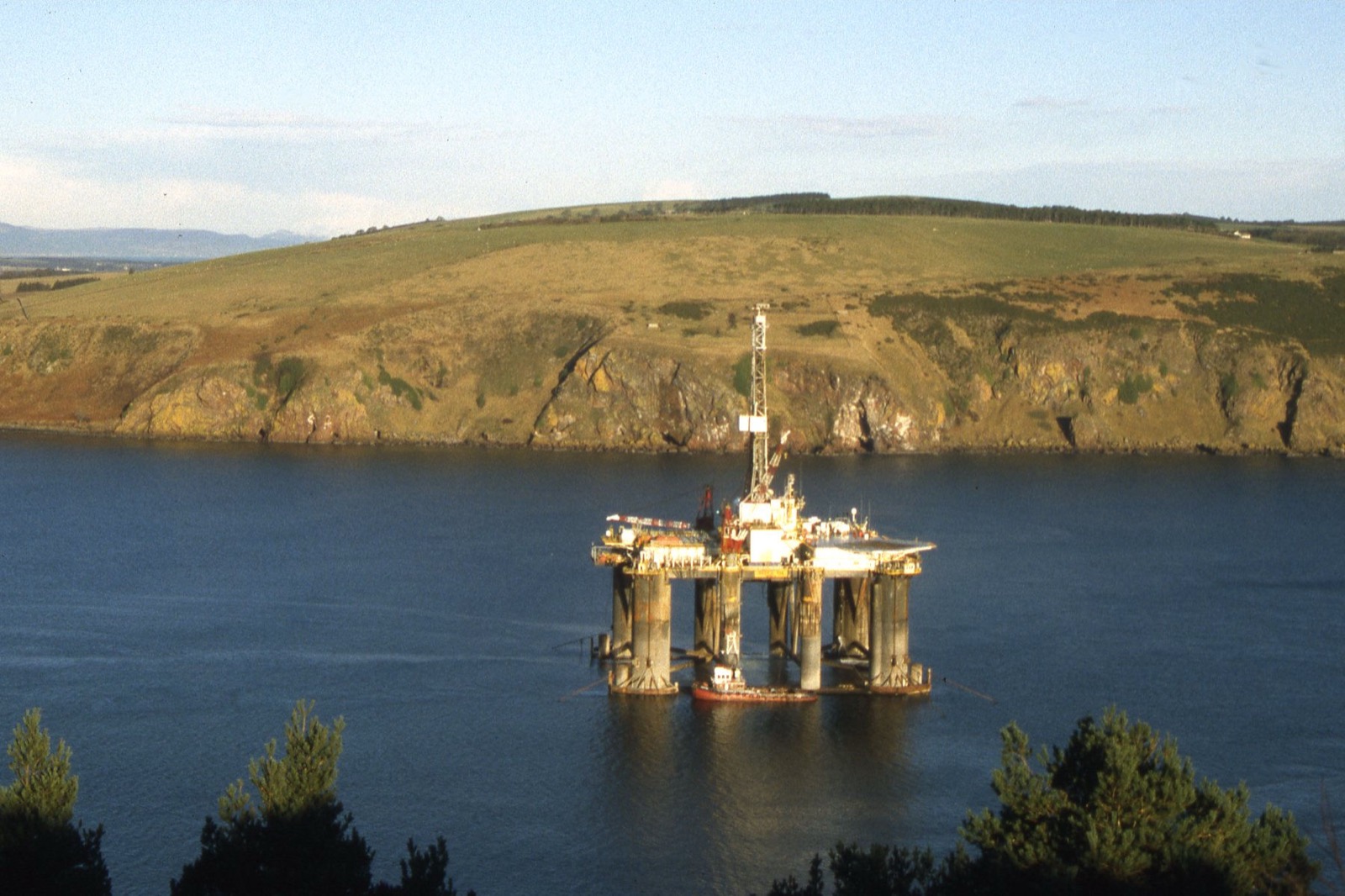
A seastead has stood in the North Sea since 1967. Roughs Tower is a naval fort of two concrete columns and a steel deck, sunk onto a sandbank about 12 km off Suffolk in 1942. In 1967 a former army major, Roy Bates, occupied it and declared it the Principality of Sealand, on the grounds that it then stood outside Britain’s three-mile territorial limit.
In 2000 a company called HavenCo installed servers in the fort’s legs and sold hosting beyond the reach of any government’s courts: an offshore data centre, a quarter of a century before the label was applied to SLAB. It had stopped trading by 2008. Britain had extended its territorial sea to 12 nautical miles in 1987, which put the fort inside UK waters, and no state has ever recognised Sealand.
Sealand’s difficulty was never the structure, which has stood for 84 years. Customers, banks and insurers need to know whose courts will enforce a contract, and Sealand could not tell them. A refinery or a metals plant needs that answer more than a rack of servers does, along with a classification society, a lender and a port state willing to accept its ships.
The same industries on a North Sea island
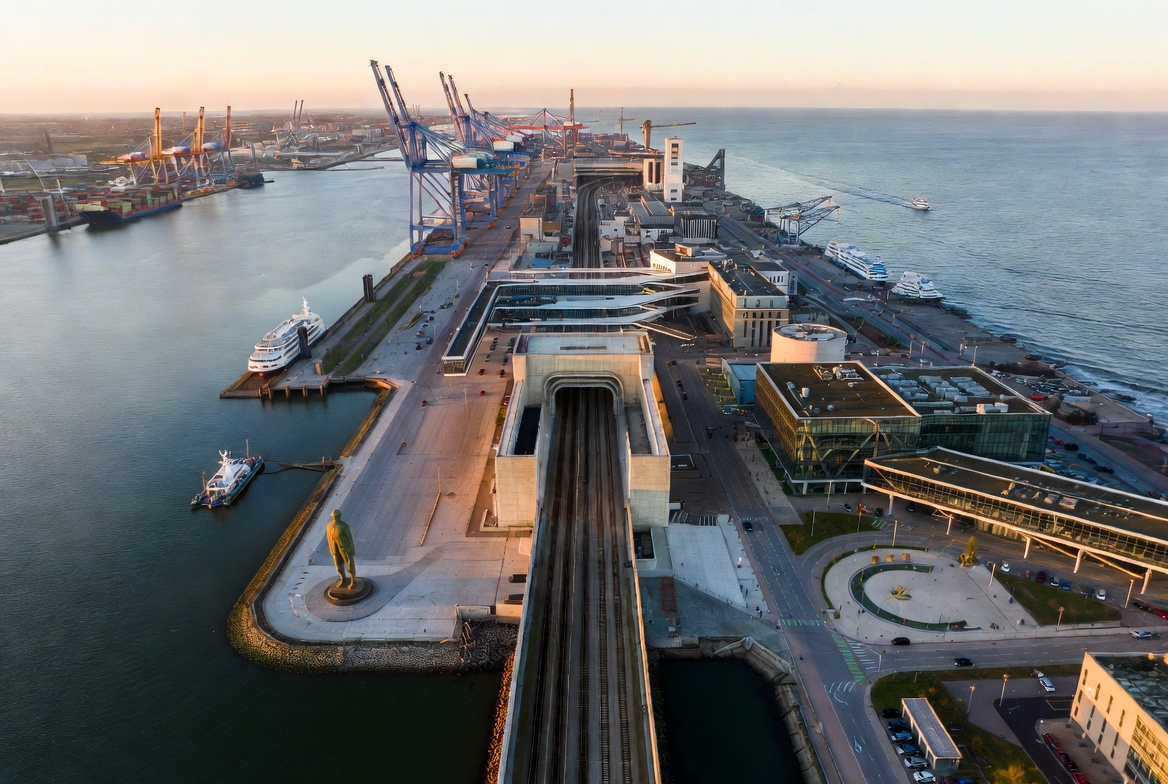
Luckey’s list overlaps with ours more than the politics would suggest. The hub island we propose at Nieuw Haven is built around hydrogen production from offshore wind, which is chemical engineering fed by desalinated seawater, and around a working harbour with quays, laydown and fuel bunkering. All of it is difficult to consent on a crowded coast, which is the case for making new ground in the first place.
We propose to obtain that ground by agreement. Under Article 60 the United Kingdom and the Netherlands can each authorise artificial islands in their own waters, and our sovereignty proposal is a treaty between them on the model of the Svalbard Treaty of 1920: settled sovereignty, with defined rights for the other signatories. A treaty of that kind can also set up one permitting regime written for the island, which gives a builder the speed Luckey is after and gives a lender the legal certainty Sealand lacked.
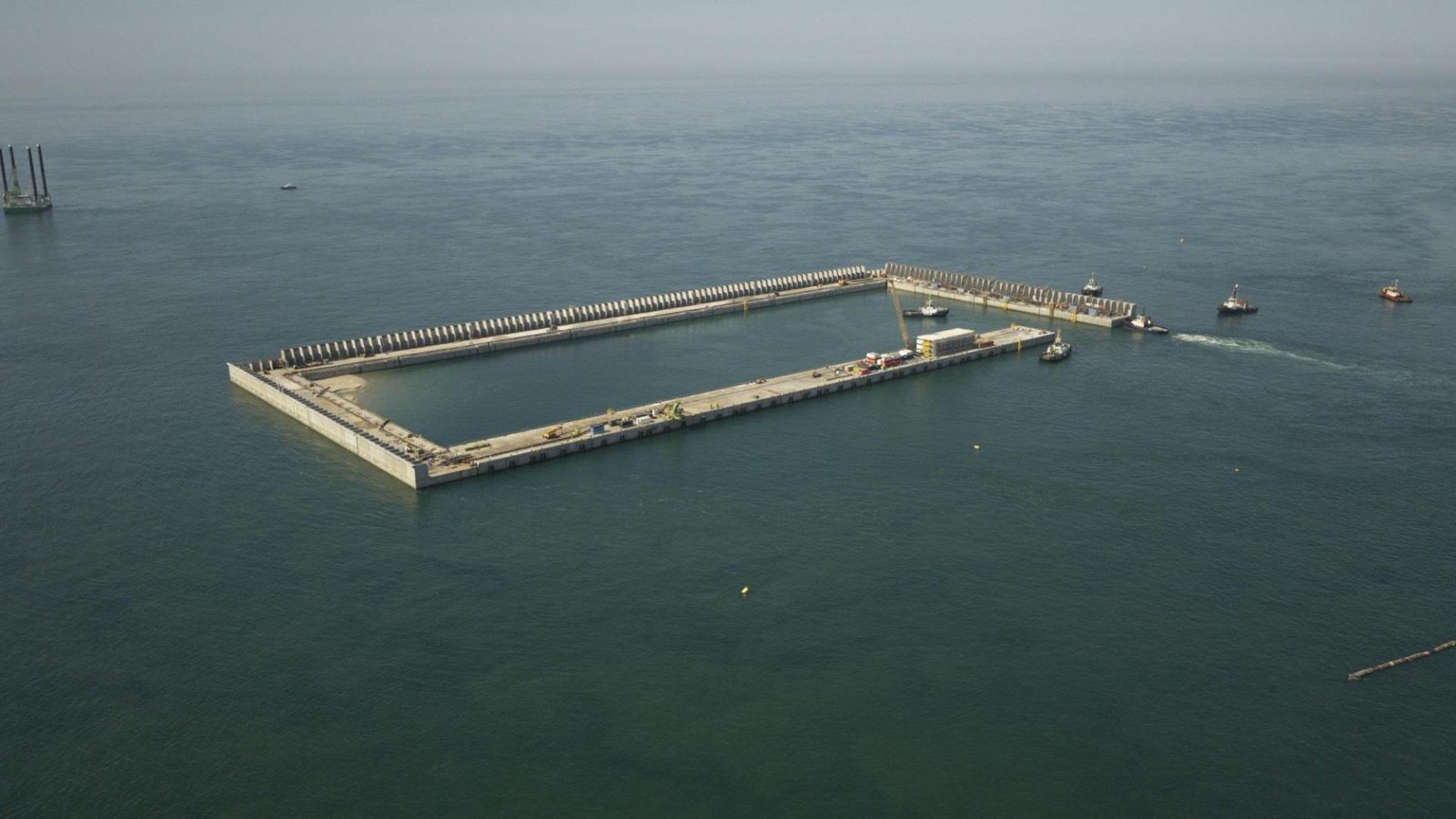
The neighbours are building this way now. Princess Elisabeth Island, the energy hub that the Belgian contractors DEME and Jan De Nul are building for the grid operator Elia, had its last caisson placed in August, 45 km off the coast and under a Belgian permit. The European Investment Bank has agreed a €1 billion loan for its electrical fit-out.
A thousand years of design life
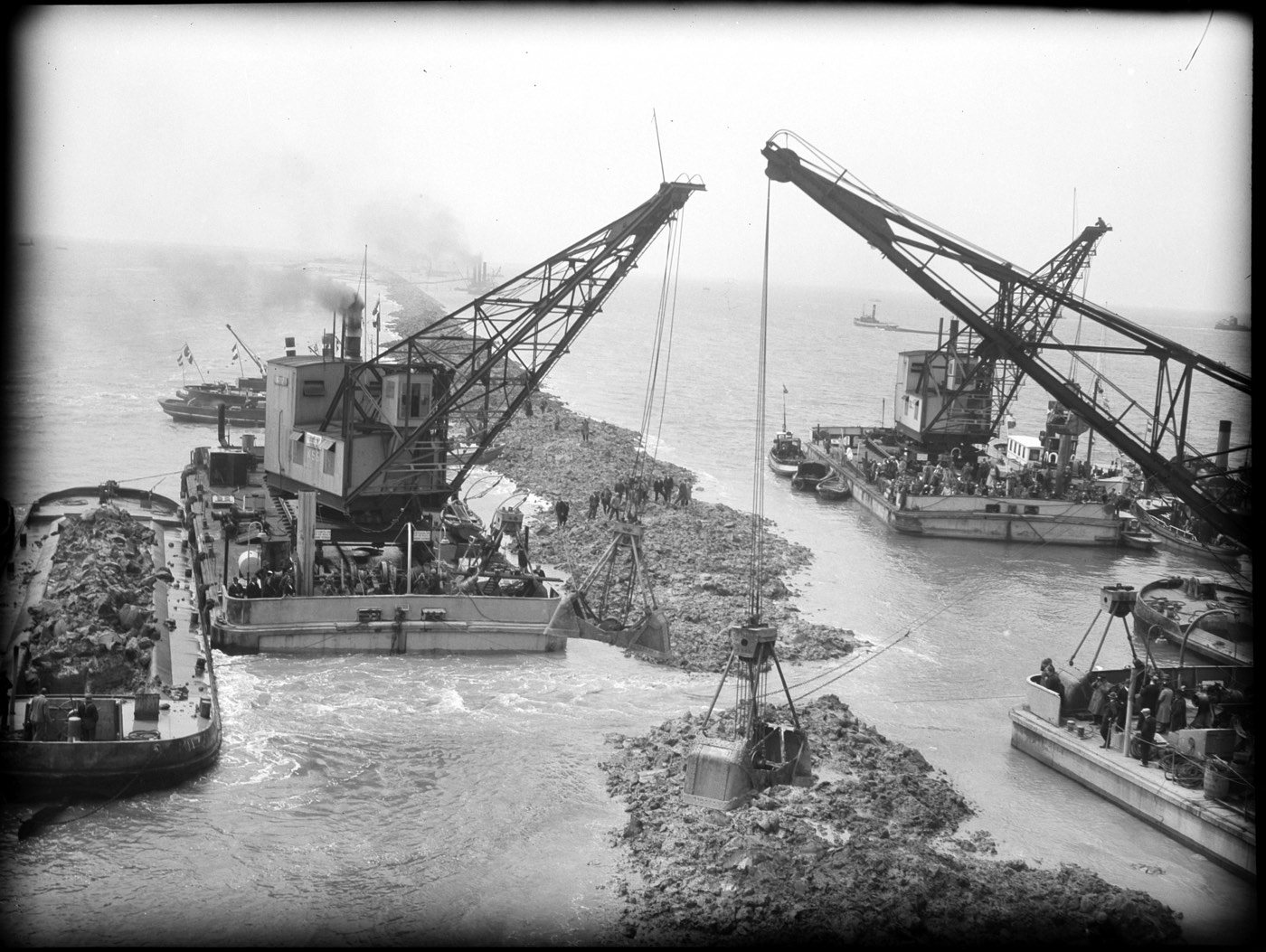
The 1,000-year figure is the part of SLAB we take most seriously. Steel offshore structures are designed for decades; the Beemster polder north of Amsterdam was drained in 1612 and is still farmed. Land made from sand, clay and rock, behind defences that each generation maintains, is the one marine structure with a record measured in centuries.
That is the material we propose to build in, on a plain that was dry land until the sea covered it about 8,000 years ago. Our roadmap puts the treaty negotiation in 2027 and 2028, before any rock is placed, and harbour construction from 2029.
Luckey has given no date for further detail on SLAB. Three things would show how far the project has come: where it sits, what flag it flies, and who insures it.