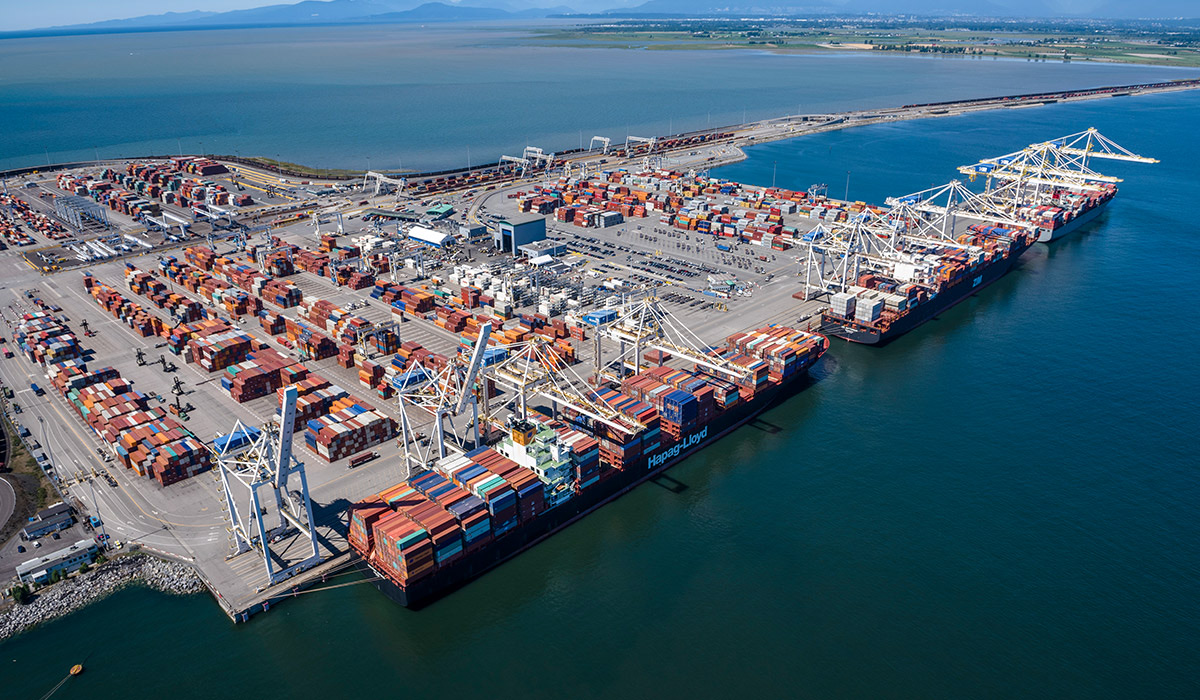
On 15 July the Vancouver Fraser Port Authority named its builder for one of the largest land-making projects in the western hemisphere. TerraMarine, a consortium of FlatironDragados Canada, Van Oord, Aecon, and Carlson Construction Group, is the preferred contractor for the landmass and wharf of Roberts Bank Terminal 2: a new three-berth container terminal standing on roughly 130 hectares of land that does not yet exist.
The scope reads like a chapter of our own engineering plan. Dredging and land reclamation to raise the terminal island from the seabed; dyke construction and rock works to hold it against the Pacific; a 1,300-metre wharf; a widened causeway carrying road and rail to the mainland; an expanded tug basin; and a programme of environmental mitigation and offsetting alongside. Van Oord’s contribution is precisely the quartet of disciplines island-building runs on: dredging, reclamation, dykes, and rock.
The numbers
The terminal will lift the Port of Vancouver’s container capacity by half, and Canada’s whole west-coast capacity by more than 30 percent. A design and early works agreement is expected in the third quarter of 2026, a design-build agreement in early 2028, and completion around 2034, with operations beginning in the mid-2030s.
Why we read Canadian port announcements
Nieuw Doggerland’s critics tend to aim at the same spot: nobody builds islands like this. The honest answer is that somebody builds islands like this almost constantly; they are just called terminals, airports, and port expansions. Roberts Bank is the latest and one of the clearest precedents, because it assembles the full sequence in one contract: consented in a G7 regulatory system, financed by a public port authority, and delivered by a multinational consortium in which a Dutch marine contractor supplies the land-making expertise.
That consortium structure matters as much as the engineering. No single firm builds a project of this scale; ports assemble consortia that pair global dredging specialists with local civil contractors, and the construction of our first islands will be contracted the same way, most plausibly with the same handful of North Sea firms at the core. When we describe the delivery model for the archipelago, Roberts Bank is now the reference we point to.
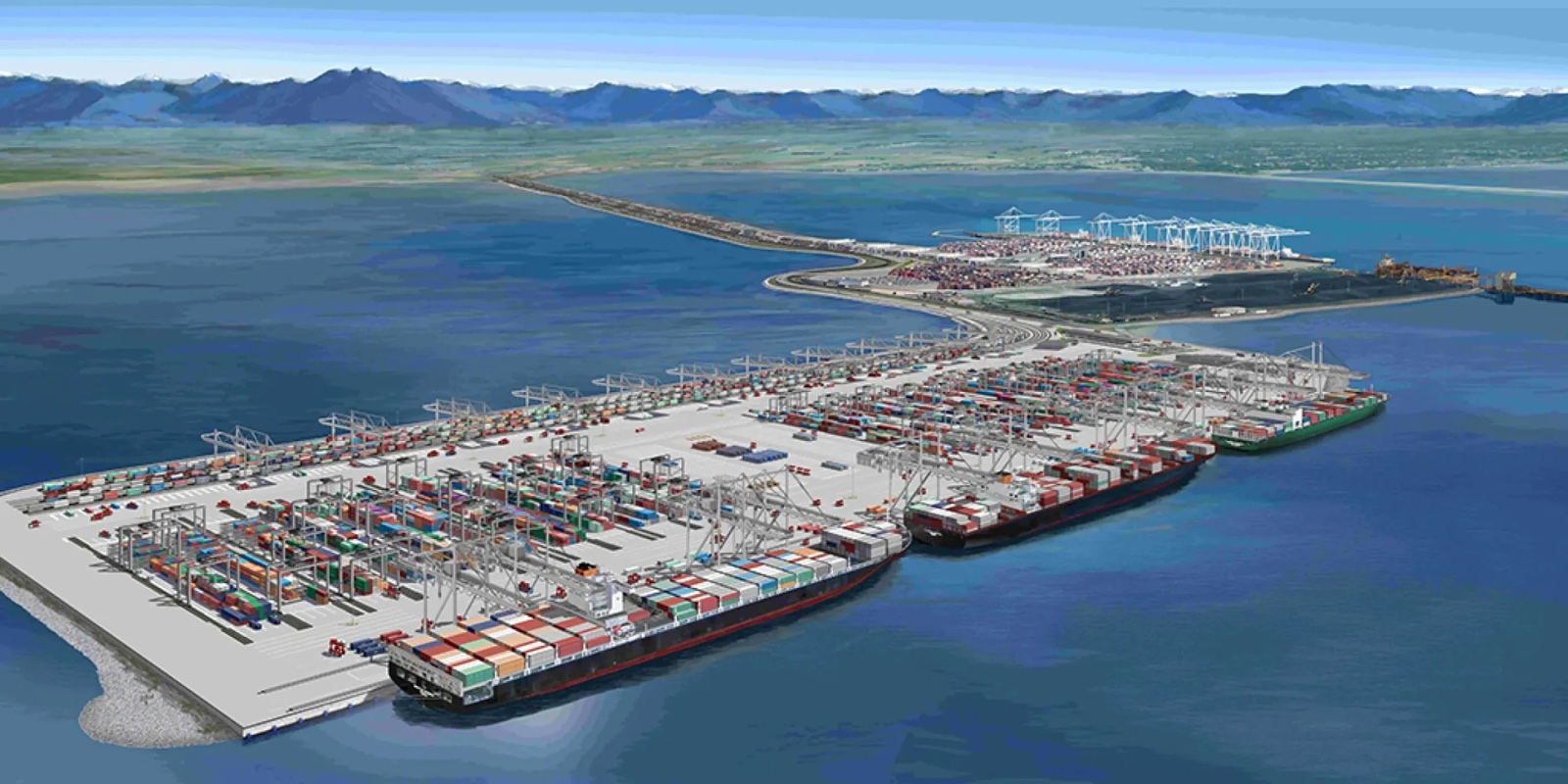
There is one more detail worth savouring in the renders: a made island, moored to the shore by a causeway, doing economic work no natural coastline could accommodate. Swap the container cranes for turbine staging and the Pacific for the Dogger Bank, and you are looking at a small, single-purpose ancestor of what we intend to build at scale. Canada did not agonise over whether new land is possible; it procured some.