Forty-five kilometres off Ostend, an island is being assembled from a kit. Seventeen of the 23 concrete caissons that will form the perimeter of Princess Elisabeth Island are now standing on the seabed, Elia reported in June; seen from the air, the world’s first artificial energy island is already a legible rectangle of new coastline in open water.
Each caisson is a reinforced concrete box of roughly 22,000 tonnes: 58 metres long, 28 wide, and up to 32 metres tall where the storm wall runs. TM Edison, the joint venture of DEME and Jan De Nul building the island for Belgian grid operator Elia, cast all 23 at Vlissingen, floated them out like ships, and has been lowering them onto a prepared seabed since April 2025. The final caisson left the yard in January; installation resumed this spring after the winter pause.
A grid hub disguised as land
The island itself is modest: some six hectares once the interior is filled with sand, with a small harbour for crew transfers. Its purpose is not modest at all. It will collect the output of the Princess Elisabeth Zone, up to 3.5 GW of Belgian offshore wind across three sites, and serve as the landing point for the interconnectors that will tie Belgium’s grid to Britain and Denmark. Elia opened the tender for the island’s civil and electrical works in February; that infrastructure build runs to 2030.
In other words: an energy super-hub standing on reclaimed seabed, collecting offshore wind and routing it between national grids. Readers of our energy programme may recognise the concept.
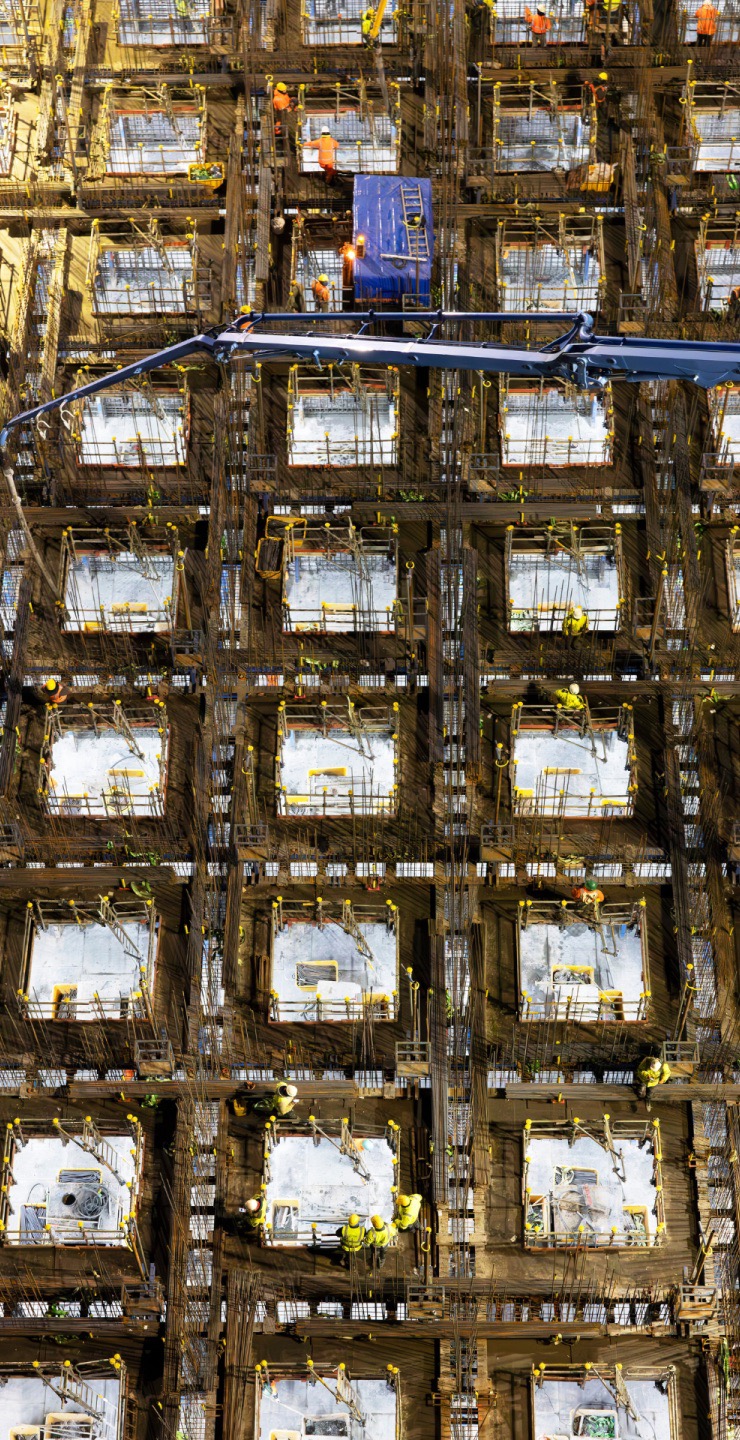
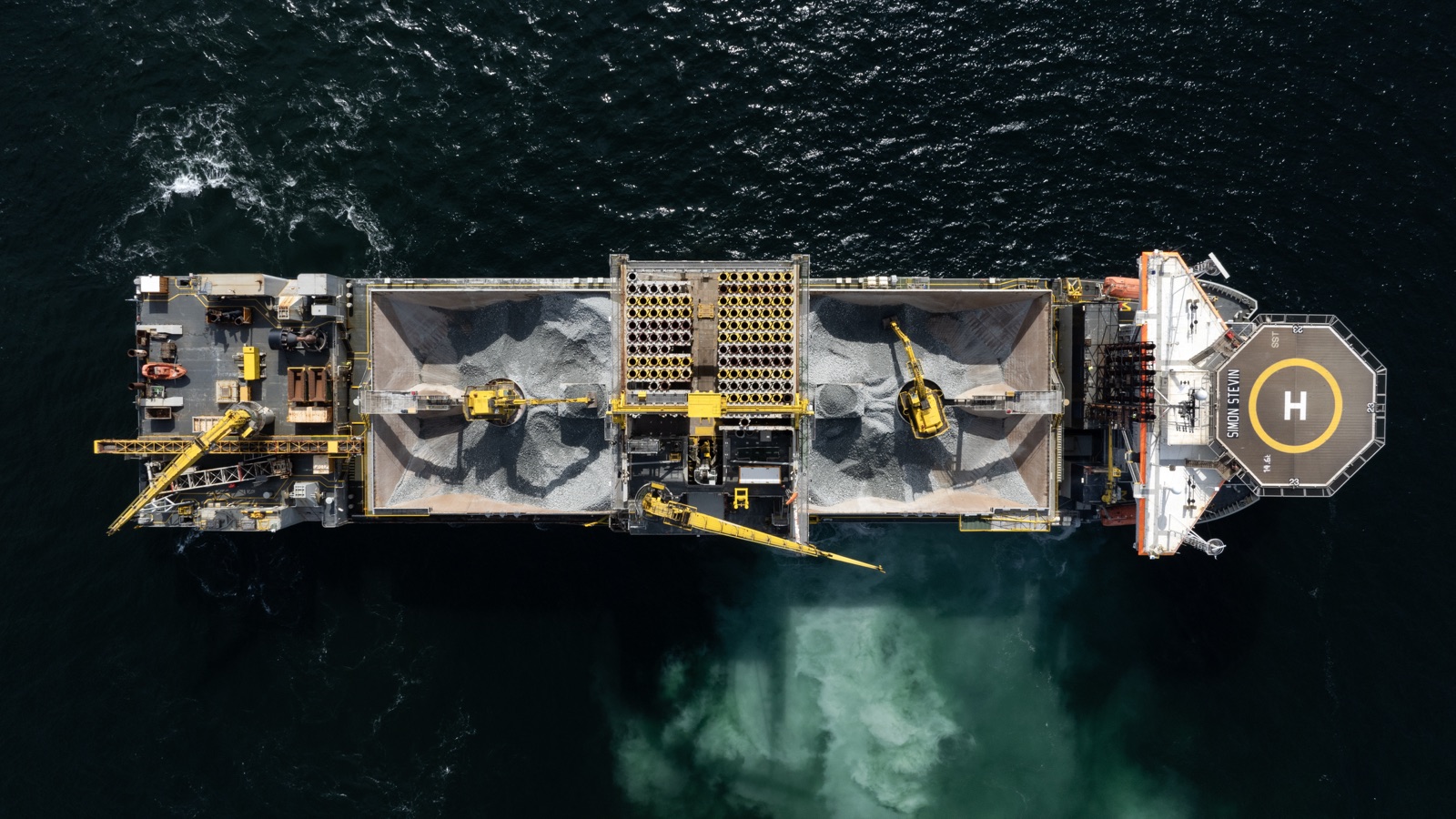
The construction method matters as much as the mission. Caissons are cast in port, towed out, and set down on a rock bed laid in advance; sand is dredged and placed. Nothing is hammered into the seabed. That is precisely the low-noise, non-percussive build our construction programme commits to for the porpoise-rich waters of the Dogger Bank, and Belgium is now demonstrating it at full scale. So is the ecology: the island’s design includes nesting ledges for seabirds, textured relief panels below the waterline, gravel beds in the scour protection, and oyster reef restoration alongside. An artificial island conceived as habitat is our ecology argument, made in Belgian concrete.
Why it matters to Nieuw Doggerland
This is Elia’s island, and neither Elia nor its contractors have any involvement in Nieuw Doggerland. But Phase 2 of our roadmap is a central hub island in the southern North Sea, built by exactly these methods and serving exactly this function at greater scale, and the firms proving the model 45 km off Ostend are the firms any North Sea island-builder would call first. When we say the hub is conventional engineering arranged at unconventional ambition, Princess Elisabeth Island is what we are pointing at.
Six caissons remain. Sometime soon, on current progress, Europe’s newest land will close its ring; the islands we plan a hundred kilometres to the north-west will be following a wake, not breaking one.
Source: installation progress via offshoreWIND.biz, from Elia Group; caisson completion and specifications via DEME Group and Jan De Nul.