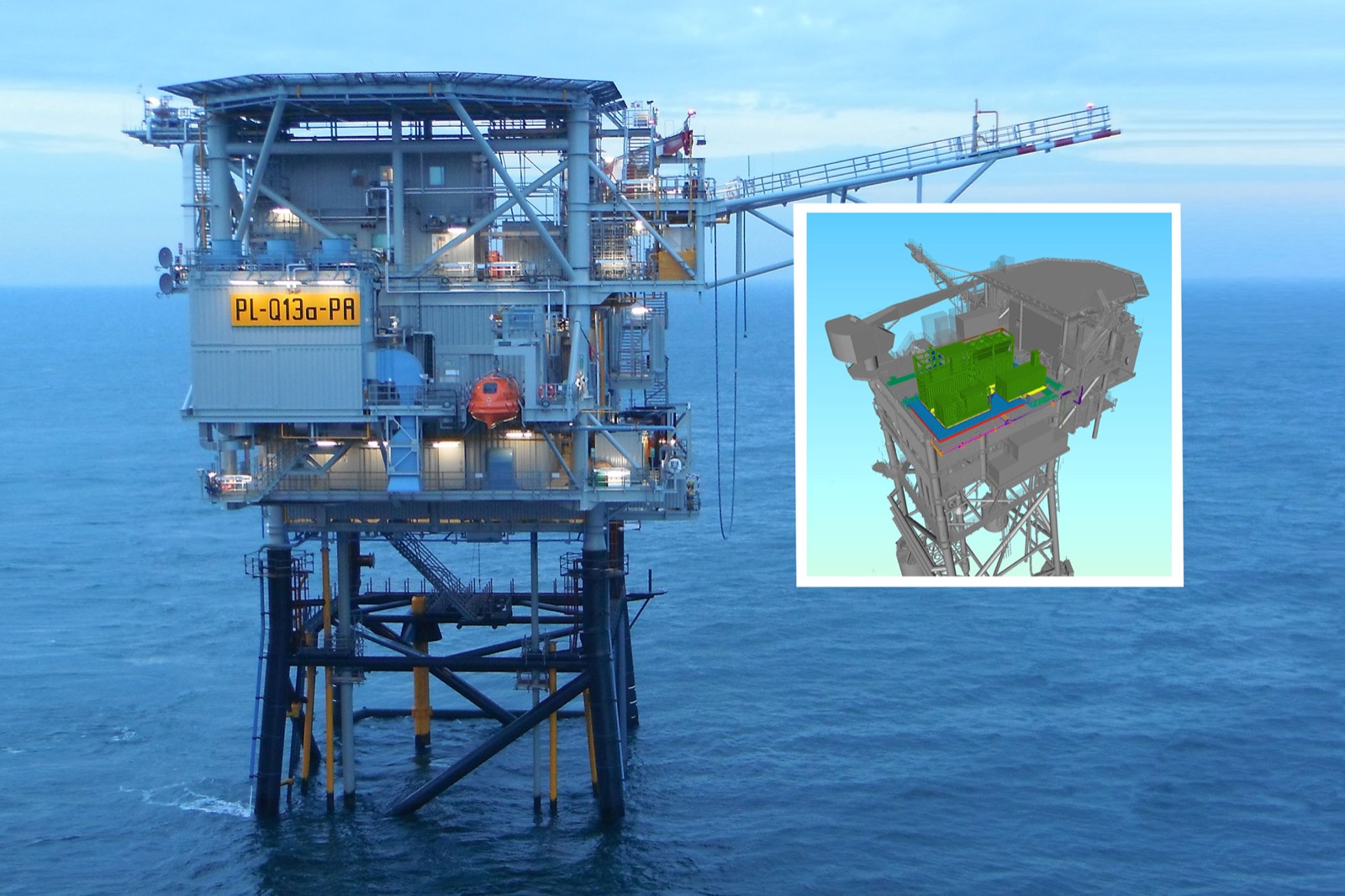
Thirteen kilometres off Scheveningen, a gas platform has started making something new. On 22 July the PosHYdon consortium announced that its pilot plant on the Q13a-A platform had produced green hydrogen at sea: electricity from offshore wind, seawater demineralised on deck, and an electrolyser splitting the result into hydrogen. It is the first time anyone has combined offshore wind power, hydrogen production, and natural gas operations on one working platform.
The platform belongs to Eni Energy Netherlands and was already a first of its kind: the first fully electrified production platform in the Dutch sector of the North Sea. Gas platforms have spent sixty years sending energy ashore; this one has simply changed the product.
What the pilot is testing
Making hydrogen was the easy half. The harder question, and the reason the pilot exists, is how an electrolyser behaves when its power supply is the weather. Over the coming weeks the plant will be run against the fluctuating output of offshore wind to measure how the system copes, what it costs, and what it takes to maintain, offshore, without a workshop next door. The consortium (Eni, TNO, EBN, Eneco, Gasunie, Nel, TAQA, DEME and others) will analyse the results through August and September and share them with the hydrogen sector in the autumn.
“This project is an important step in scaling up offshore hydrogen production based on offshore wind energy,” said Rene Peters, TNO’s Business Director Energy Infrastructure. TNO’s phrasing is careful; ours can be plainer. Every serious plan for the North Sea’s energy future, including ours, assumes that wind power can be converted to hydrogen at sea and moved through pipes rather than cables. That assumption has now survived contact with the actual sea.
Why it matters to Nieuw Doggerland
PosHYdon is a Dutch consortium project with no connection to Nieuw Doggerland. It does demonstrate, in working hardware, the energy model the Energy programme is built on. Our founding prospectus describes an Energy Super-Hub on the Dogger Bank: wind farms feeding green power, hydrogen production, and grid interconnection from new islands. Phase 2 of the roadmap puts the first wind and hydrogen infrastructure on the central hub island itself.
There is also a quieter lesson in where the pilot lives. Q13a-A was built for gas and repurposed for hydrogen; the North Sea’s next energy system is being assembled on the bones of its last one. An island, of course, offers rather more deck space than a platform. When the results are published this autumn, they will be read closely in this project; a hub island’s hydrogen plant is this pilot, scaled up and given solid ground to stand on.
Source: PosHYdon’s announcement, with additional detail via Offshore Engineer.